US Anti-Dumping Duties on Chinese MDI Resets Polyurethane Sourcing

Importers of Chinese MDI face duties up to 159.04 percent, forcing a swift transition to alternate global chemical suppliers.


29.08.26 2 min

Briefing

The United States Department of Commerce has finalized its affirmative anti-dumping determination on Chinese methylene diphenyl diisocyanate, levying steep customs duties on polyurethane’s primary chemical feedstock. Sourcing from China’s major producers now carries a heavy cost penalty, forcing procurement desks to quickly redirect orders to European, Middle Eastern, or other Asian chemical manufacturers to protect margins. With importers facing a baseline anti-dumping duty of 159.04 percent, low-cost Chinese feedstock is effectively cut off from US insulation and adhesive markets.

A fractured composite material sample rests inside a dark industrial display grid surrounded by various architectural surface finishes.

Context

The Commerce Department launched the dumping investigation in March 2025. At first, industrial buyers treated the inquiry as routine regulatory noise, continuing to lock in Chinese supply under long-term agreements. Many assumed the preliminary tariffs introduced later that year were as bad as it would get, banking on a final determination with lower margins that would keep existing supply chains viable without sharp price increases.
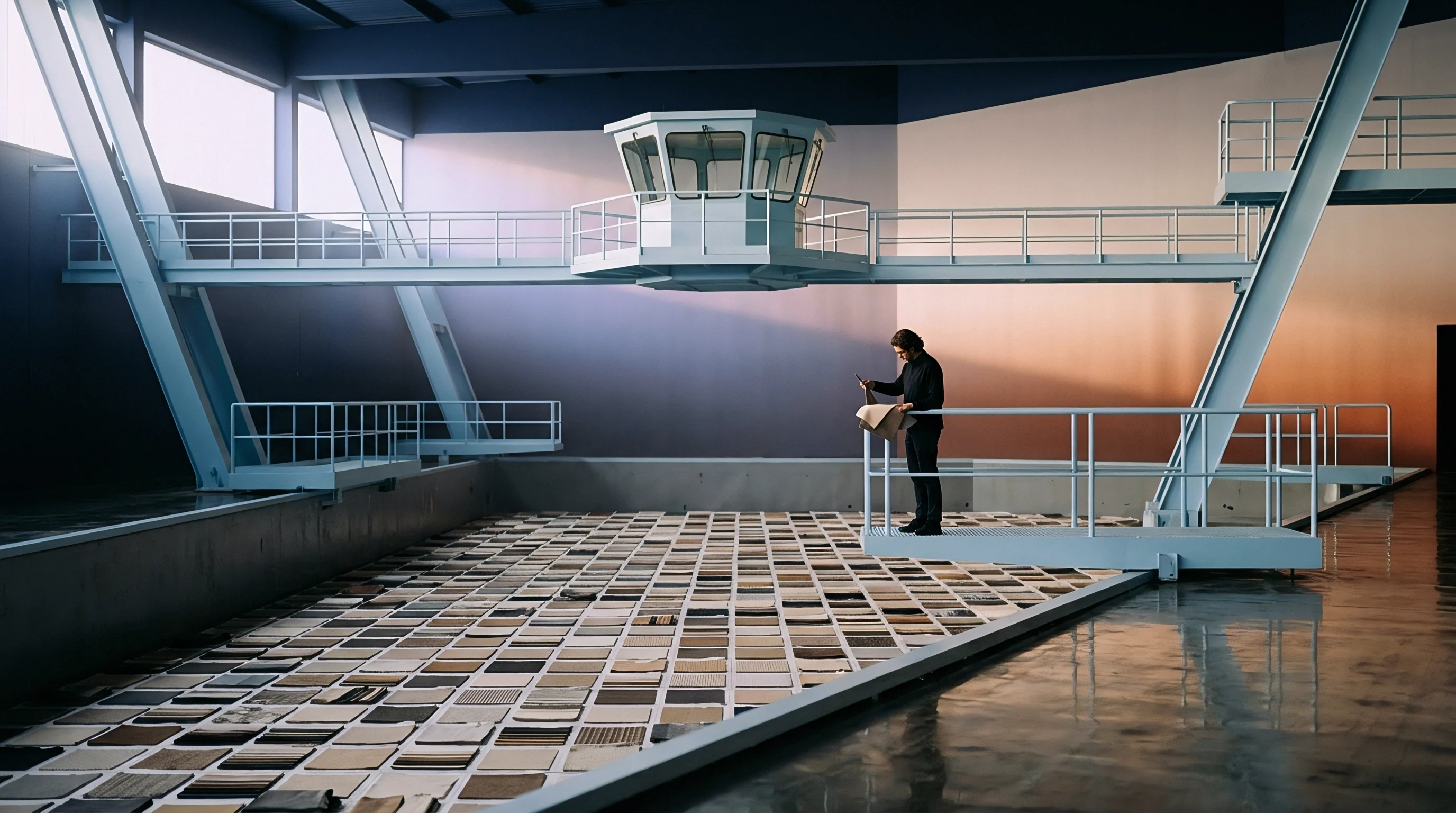
An industrial quality auditor evaluates material samples arranged across a concrete factory floor beneath an elevated control booth.

Analysis

The tariffs follow Commerce’s finding that Chinese suppliers were dumping feedstock into the US market below fair value. The duties fall into two distinct tiers: selected major exporters face an 85.11 percent margin, while all other Chinese producers draw the full 159.04 percent rate. Because customs collects duties at the point of entry, the hit to downstream costs is immediate. As the core precursor for polyurethane foam, higher MDI prices will feed straight into automotive seating, residential furniture, and building insulation. Procurement teams will need to walk away from Chinese volumes and start qualifying alternative suppliers in unaffected markets.

Various flat industrial panels in blue, purple, and beige tones are arranged in overlapping layers, with a dark textured component on the left.

Parameters

  • Exporter Tariff Ceiling ~ 159.04 percent applied to all unlisted Chinese exporters of the feedstock.
  • Major Producer Margin ~ 85.11 percent assigned to Wanhua Chemical Group, Covestro China, and Shandong Mingko.
  • Customs Classification Codes ~ US tariff codes 2929.10.8010 and 3909.31.0000 representing methylene diphenyl diisocyanate.
  • Investigation Initiation Date ~ March 4, 2025 following petitions from domestic chemical manufacturers.
  • Final Ruling Implementation ~ April 8, 2026 marking the date the tariffs became legally binding at United States borders.

An aged metal kettle and a brass bell rest on light blue textile over varied raw material samples and industrial surfaces.

Outlook

The coming quarter will test how quickly alternative suppliers can absorb displaced US demand. Procurement teams should monitor export volumes out of European and Southeast Asian plants ~ the main options outside the tariff scope ~ while watching regional spot indices to see if redirected US purchasing pushes up global prices. Late-2026 contract negotiations will ultimately reveal how much of this cost increase downstream end-users are willing to absorb.

An illustration features a wooden gavel on a circular sound block surrounded by raw timber sections, steel components, ceramic parts, and quartz minerals.

Verdict

Buyers must shift polyurethane feedstock procurement away from Chinese suppliers to alternative regions immediately to avoid duties of up to 159.04 percent.

Signal Acquired from: IAL Consultants

Nomenclature

Supply Chain Diversification

Asset Geography ~ Redundancy in procurement networks prevents production halts by spreading dependency across multiple regions.

Industrial Adhesive Sourcing

Adhesive Procurement ~ Procurement teams identify and qualify chemical bonding agents through industrial adhesive sourcing to meet specific mechanical requirements for structural assembly, ensuring that the chemical compatibility of substrates matches the performance of the chosen bonding agent.

Polyurethane Raw Materials

Chemical Formulation ~ Liquid chemical compounds combined in precise stoichiometric ratios react to form rigid foams, flexible foams, coatings and elastomers.

Polymer Import Margins

Financial Metric ~ Profitability assessments measure the difference between domestic plastic resin prices and the landed cost of imported materials.

Specialty Chemical Pricing

Market Assessment ~ Proprietary valuation benchmarks define the commercial exchange rates for performance substances synthesized for unique industrial applications rather than mass market commodity turnover.

Methylene Diphenyl Diisocyanate

Chemical Composition ~ Specialized organic compounds are essential precursors in the manufacture of polyurethane polymers.

Anti-Dumping Duties

Regulatory Scope ~ Government intervention measures are applied to foreign goods sold below their fair market value to prevent injury to domestic industries.

Automotive Supply Chains

Structural Load ~ Material coordination across international manufacturing operations depends entirely upon automotive supply chains.

United States Trade Policy

Governmental Framework ~ Executive authority directs these protocols to manage the flow of physical goods across borders through a combination of tariff schedules, administrative quotas, and specific product exclusions.

Construction Insulation Material

Thermal Performance ~ Building envelope design utilizes specialized products to resist heat transfer through walls and roofs.

Department of Commerce Rulings

Regulatory Determination ~ Determinations issued by the International Trade Administration clarify how specific imported products align with antidumping and countervailing duty orders.

Chemical Feedstock Procurement

Raw Sourcing ~ Industrial manufacturing relies on the systematic acquisition of basic chemical building blocks to feed downstream production lines.

What the firm knows, published

Expertise is a utility, not a secret. sentiention™ publishes its working knowledge as open reference: intelligence layer covering the materials it sources, the markets it enters, and the reference that serves both.