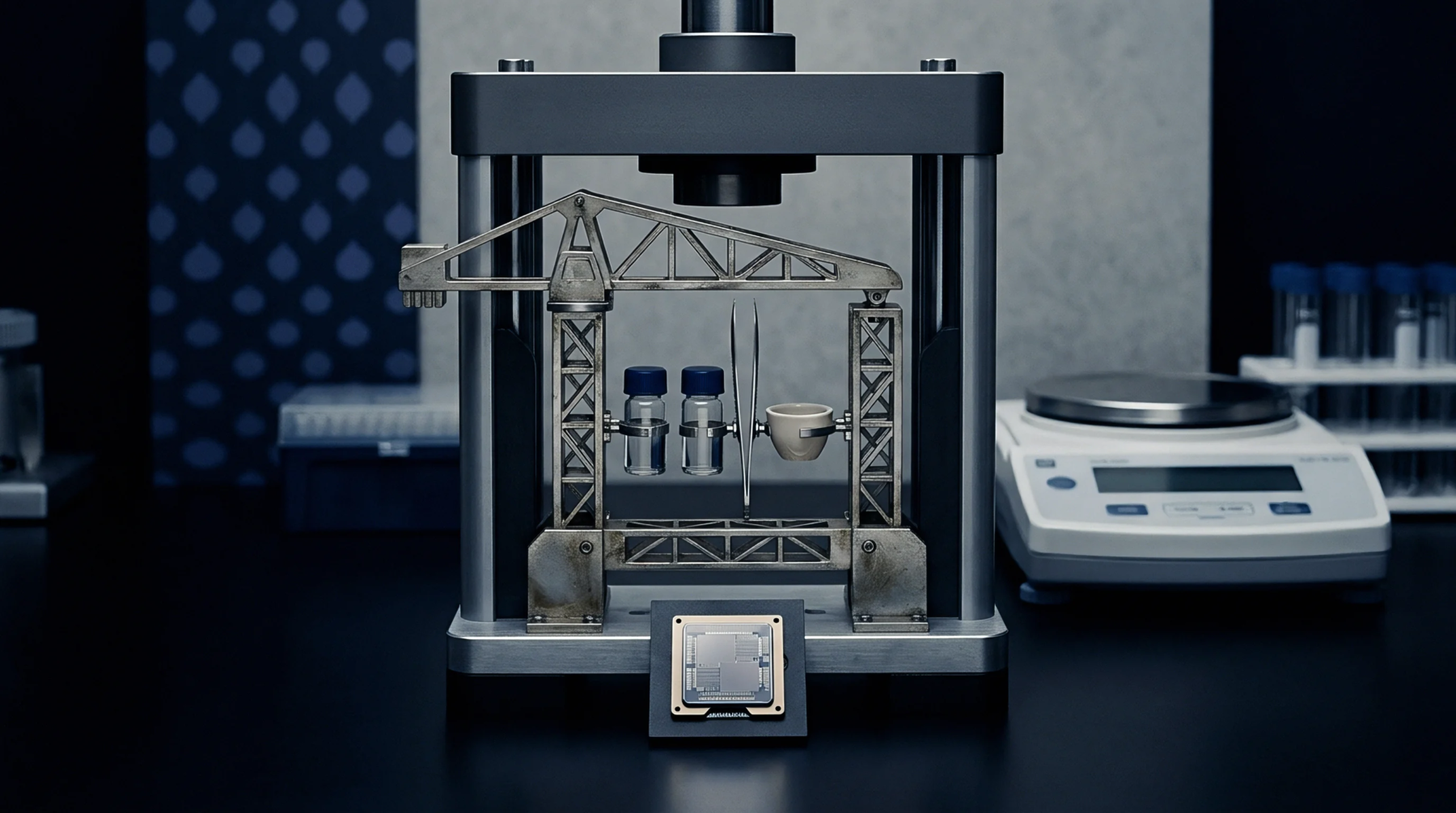
Inorganic Ceramic
An exceptionally hard, dense inorganic compound composed of equal parts tungsten and carbon atoms forms the metallurgical foundation for modern industrial cutting, drilling, and wear-resistant applications. Referred to throughout industrial tooling and advanced metallurgy as tungsten carbide, or simply carbide, this material carries the chemical formula WC and exhibits a hardness approaching that of diamond alongside a density double that of standard steel. It functions as the core abrasive and cutting medium in metal machining inserts, mining drill bits, oilfield downhole tools, and high-wear mechanical seals.
The designation ceases to apply when chemical leaching, extreme oxidation, or chemical recycling strips the material back down into component mineral salts.
Compounding Metallurgy
Production begins with the solid-state carbidization of pure tungsten metal powder blended with high-purity carbon black under high-temperature hydrogen or vacuum furnace atmospheres between one thousand four hundred and two thousand degrees Celsius. The resulting tungsten carbide powder is then wet-milled with metallic binder powders, typically cobalt or nickel, in rotating ball mills to achieve homogeneous distribution and the desired grain size. Processing aids like paraffin wax are added to facilitate cold pressing of the milled powder into green compact shapes inside precision hydraulic dies.
Sintering occurs inside vacuum or hot isostatic pressing furnaces at temperatures exceeding one thousand three hundred degrees Celsius, where the cobalt binder melts and wets the hard carbide grains, consolidating the compact into a fully dense component with negligible porosity.
Industrial Deployment
Metalworking, mineral extraction, tunneling, and aerospace manufacturing depend entirely on the mechanical toughness and extreme hot-hardness of sintered carbide components. Tool manufacturers apply physical or chemical vapor deposition coatings of titanium aluminum nitride or diamond-like carbon to sintered carbide inserts to increase tool longevity during high-speed metal cutting operations. The balance between carbide grain size and cobalt binder content dictates the material trade-off, where lower cobalt content increases wear hardness while higher binder levels improve impact resistance.
Spent tooling, worn inserts, and grinding sludges represent a valuable recycling stream, which processors treat via zinc recycling or chemical digestion to recover both critical metals. The stability of carbide tool supply lines directly impacts operating productivity across global automotive, mining, and heavy machining sectors.