Tungsten Supply Shortfalls Threaten Global Semiconductor and Aerospace Sourcing

Tightening Chinese tungsten export quotas force semiconductor and aerospace buyers to secure alternative high-purity feedstocks.

27.08.26 2 min

Briefing

Japan’s Kanto Denka and Central Glass halted tungsten hexafluoride production after running out of Chinese feedstock. The shutdown interrupts output of the gas used in semiconductor chemical vapor deposition, forcing chip procurement teams to redesign contracts and find secondary suppliers. The bottleneck pushed global ammonium paratungstate prices to historic highs and threatens downstream logic and memory chip lines.

Together, the idle plants account for twenty-five percent of global tungsten hexafluoride capacity.

An illustration features a wooden gavel on a circular sound block surrounded by raw timber sections, steel components, ceramic parts, and quartz minerals.

Context

Procurement desks spent the past year debating whether non-Chinese tungsten mines in South Korea and North America could scale up fast enough to offset Beijing’s tighter export licenses. Buyers had assumed regional processing hubs carried enough buffer stock of intermediate ammonium paratungstate to maintain supply through the transition.

Stacked industrial material samples sit under a flowing blue translucent polymer sheet in a digital render of supply chain logistics.

Analysis

The crisis stems from Beijing’s decision to tighten export controls on raw tungsten products. Because China controls eighty percent of global extraction, restricting outbound shipments quickly starved overseas refiners of feedstock. The limits drove down domestic prices inside China as raw material accumulated, while foreign buyers faced severe shortages.

With global inventories at record lows, the shock moved fast from mines to chemical refineries, bringing gas production lines to a halt and driving up costs for industrial tooling and carbide end mills.

An array of raw materials including wood, various minerals, metal plates, and electronic components rests on a dark industrial floor.

Parameters

  • Shutdown Date ~ July 1, 2026, when major Japanese producers suspended tungsten hexafluoride operations due to a lack of feedstock.
  • Capacity Affected ~ 25 percent, the portion of global tungsten hexafluoride production capacity taken offline by the shutdown.
  • Ammonium Paratungstate Price ~ 2,900 dollars per metric tonne unit, a ninefold increase since early 2025 driven by export restrictions.
  • Chinese Supply Concentration ~ 80 percent, the share of global tungsten production controlled by China, underlining the fragility of the current supply chain.

A large aerospace door assembly rests on a wooden cargo pallet positioned on an illuminated tarmac surrounded by nocturnal hangar facilities and aircraft silhouettes.

Outlook

Over the coming quarters, procurement teams should track operational progress at the Sangdong mine in South Korea, which expects to scale production by early 2027. Success there would help relieve the global feedstock deficit. Buyers should also follow monthly export filings from the Chinese Ministry of Commerce to see if Beijing adjusts or further tightens its permit allocations.

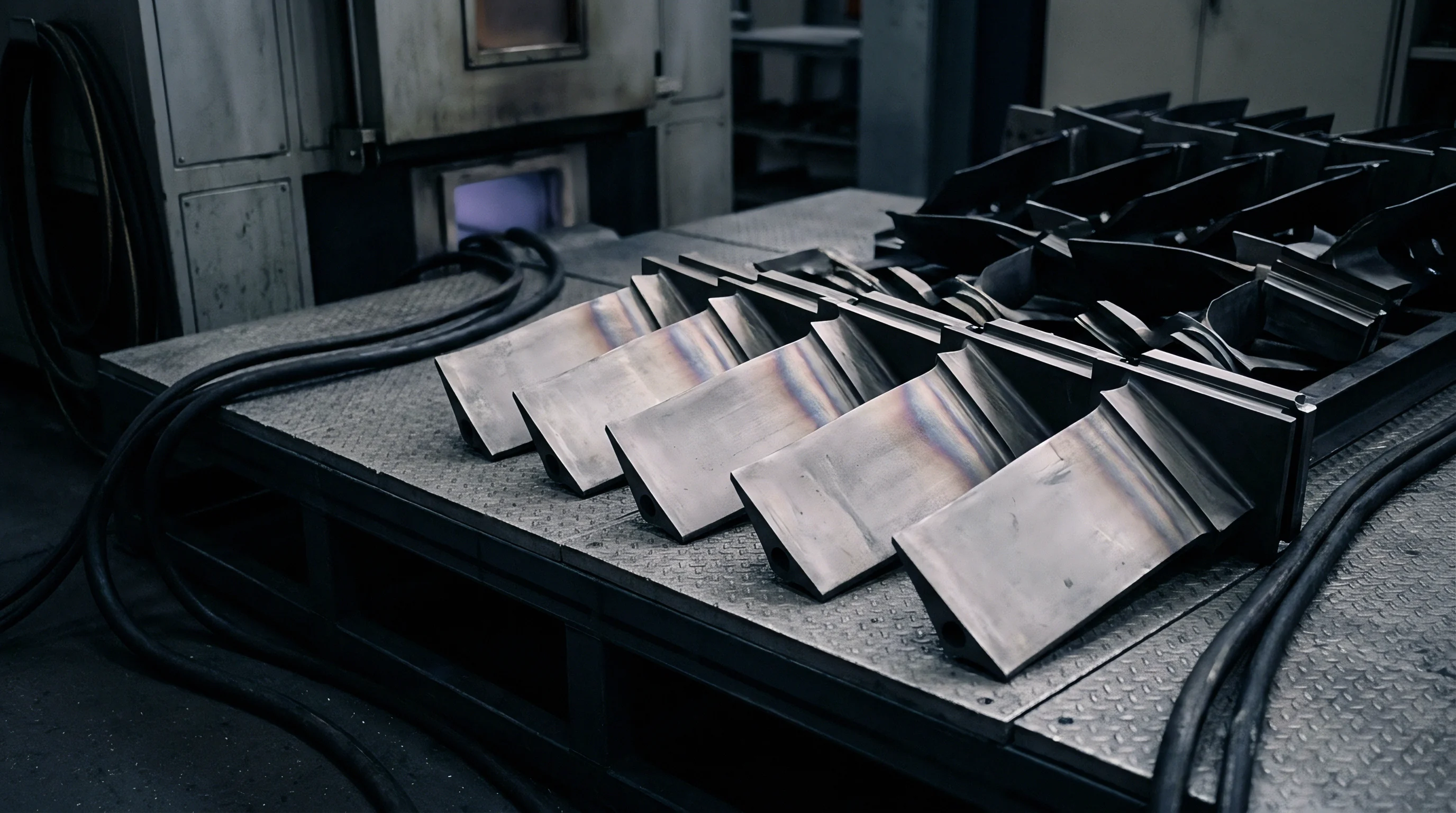
Precision metrology equipment inspects a metallic turbine blade mounted on a dark staging platform within a production testing facility.

Verdict

Buyers must immediately secure multi-year supply contracts with ex-China tungsten mines and pre-order high-purity chemical derivatives to shield production schedules from ongoing export controls.

Signal Acquired from: Global Sources

Nomenclature

Semiconductor Manufacturing

Fabrication Process ~ Ultra-clean photolithographic patterning, chemical etching, ion implantation and thin-film deposition build microscopic integrated circuits onto high-purity silicon wafers.

Ammonium Paratungstate

Precursor Chemistry ~ Industrial tungsten production relies on a white crystalline salt of ammonium and tungsten as the primary intermediate extracted from refined wolframite or scheelite ores.

Export Restrictions

Regulatory Boundary ~ Government mandates control the movement of specific commodities and technical data across international borders.

Raw Materials

Primary Inputs ~ Unprocessed mineral ores, agricultural yields, unrefined hydrocarbons, and basic chemical substances extracted from natural reserves or primary harvesting operations form the foundational inputs for manufacturing.

Electronics Sourcing

Supply Chain Acquisition ~ Component procurement involves the selection and engagement of manufacturers or distributors to obtain hardware for assembly.

Tungsten Powder

Metallic Particulate ~ Finely divided elemental tungsten metal particulate produced through the high-temperature chemical reduction of purified tungsten oxides serves as the primary metallurgical starting material for pure tungsten mill products and heavy alloys.

Tungsten Carbide

Inorganic Ceramic ~ An exceptionally hard, dense inorganic compound composed of equal parts tungsten and carbon atoms forms the metallurgical foundation for modern industrial cutting, drilling, and wear-resistant applications.

Specialty Metals

Alloy Specification ~ High-purity metallic compounds and refined elemental stocks engineered for extreme thermal endurance and precise metallurgical compliance constitute specialty metals within aerospace manufacturing supply chains.

High Purity Feedstocks

Chemical Procurement ~ Material inputs requiring exceptional baseline purity arrive at synthesis plants under strict contamination thresholds, where chemical manufacturers rely on high purity feedstocks to prevent catalyst poisoning in polymerization reactors.

Aerospace Alloys

Alloy Yield ~ Metallic formulations engineered for extreme operational stress form the foundational materials class that industry trades as aerospace alloys.

Chemical Vapor Deposition

Thermal Deposition ~ Surface engineering relies on chemical vapor deposition to grow solid thin films from volatile precursor gases inside a heated reaction chamber.

Industrial Toolings

Operational Definition ~ Precision machining fixtures and dedicated metal forming dies comprise the physical asset class known as industrial toolings, which dictates the geometric tolerances achievable across high volume component manufacture.

What the firm knows, published

Expertise is a utility, not a secret. sentiention™ publishes its working knowledge as open reference: intelligence layer covering the materials it sources, the markets it enters, and the reference that serves both.