Oman and Iran Agree on Hormuz Shipping Corridor Easing Trade Delays

Iran and Oman agree on a temporary Hormuz shipping corridor to resume commercial cargo transits and reduce delays.

29.08.26 2 min

Briefing

Iran and Oman have agreed to a phased framework establishing a temporary shipping corridor and a joint mine-clearing project in the Strait of Hormuz. For buyers and logistics managers, the deal opens a path back to direct routing through a channel blocked by conflict and sea mines. Reopening transit should trim sailing times, stabilize surging freight rates, and ease supply delays across commodities and consumer goods. While commercial vessels could soon bypass long detours adding days to shipping schedules, full implementation still hinges on broader international agreements. The Strait of Hormuz normally handles 30% of global fertilizer trade, underscoring reliance on the route.

An illustration features a wooden gavel on a circular sound block surrounded by raw timber sections, steel components, ceramic parts, and quartz minerals.

Context

Procurement desks have watched the complete blockage of the Strait of Hormuz closely as regional conflict closed the primary route for Middle Eastern commodities. Supply chains were already strained by lengthy diversions around the Cape of Good Hope and rising shipping surcharges. Shippers were left waiting to see if diplomacy could restore safe passage or if they would have to keep absorbing extended transit times and soaring insurance premiums indefinitely.
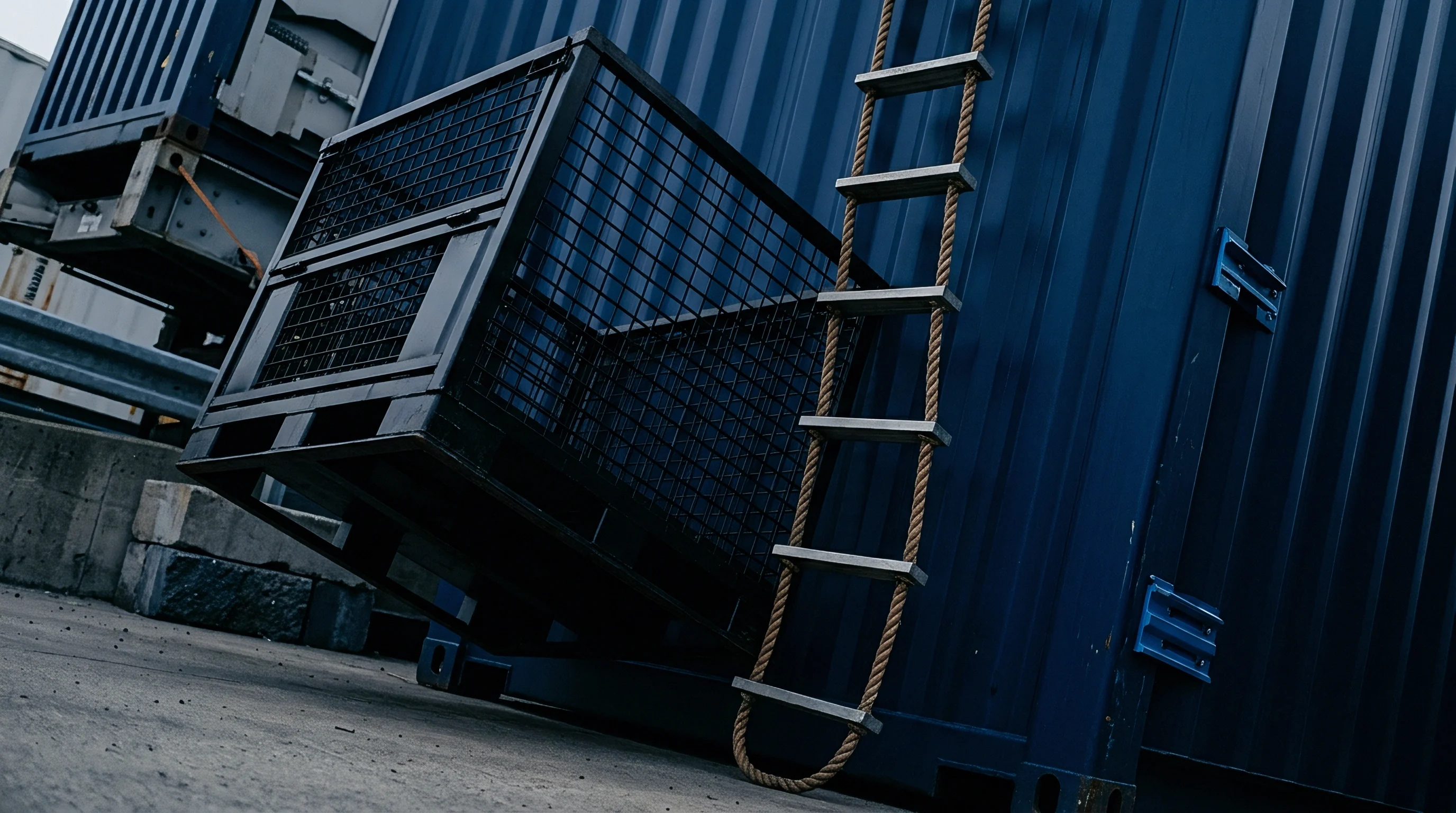
A dark blue corrugated steel shipping container stands behind a black steel mesh pallet cage and a suspended wooden rung rope ladder.

Analysis

The agreement between Muscat and Tehran functions like a single lane cleared through a heavily mined waterway while surrounding waters remain hazardous. By setting up a joint mine-sweeping project and defining specific commercial lanes, both nations create a secure channel where merchant fleets can move without facing immediate military action or explosive risks. That coordination reaches down the supply chain by giving insurers the safety assurances needed to trim high war-risk premiums. As insurance rates fall and vessel security improves, ocean carriers can restore regular schedules through the strait, leading directly to shorter transit times and lower landed costs on buyer order books.

A wooden shipping pallet lies on a concrete floor centered between two coiled ropes with a lectern and data charts in a dark industrial space.

Parameters

  • 30 percent ~ Share of global fertilizer trade dependent on the Strait of Hormuz chokepoint.
  • 25 percent ~ Share of global petroleum trade that transits through this waterway under normal conditions.
  • 30 to 60 days ~ Timeframe allocated for Muscat and Tehran to transition from the temporary corridor to a permanent transit agreement.
  • 19 percent ~ Share of global liquefied natural gas trade routed through the Strait of Hormuz.

An operations auditor sits on steel warehouse shelving reviewing cargo manifests surrounded by stacked shipping containers in an outdoor freight terminal.

Outlook

Logistics teams will need to follow technical negotiations between Muscat and Tehran over the next two months. Shippers should watch for carrier notices regarding restored direct Gulf services and the removal of regional conflict surcharges. Concrete progress on joint mine-clearing will be the earliest sign that this temporary corridor is moving from a diplomatic draft into a functional maritime route.

Heavy steel structural assembly rests on a wheeled transport cart inside a dim industrial facility corridor.

Verdict

Buyers must monitor the technical corridor talks to prepare for a drop in Gulf-bound transit times while keeping alternative logistics plans active until shipping lanes are verified as safe by major carriers.

Signal Acquired from: The Maritime Executive

Nomenclature

Shipping Chokepoints

Maritime Constraint ~ Restricted passages in global waterways function as geological or manmade segments where vessel traffic volume exceeds the physical clearance available for movement.

Trade Route Disruptions

Network Vulnerability ~ Unexpected events that block or redirect the flow of goods along established shipping channels force logistics operators to seek alternative transport paths.

Marine Fuel Logistics

Energy Supply ~ Distribution networks for heavy fuel oil and distillates ensure that ocean-going vessels receive the power necessary to traverse global trade routes.

Port Congestion Prevention

Traffic Management ~ Maritime logistics strategies optimize the flow of cargo through marine terminals to avoid vessel delays.

Commercial Vessel Transit

Passage Execution ~ Maritime movement between loading berths and discharge terminals forms the physical link in ocean freight transport.

Maritime Transit Corridors

Navigational Route ~ Designated shipping lanes established by international maritime authorities organize the flow of heavy vessel traffic through high-density waters.

Bulk Commodity Logistics

Operational Flow ~ Industrial transport systems rely on specialized methods to move unpackaged raw materials in large volumes across global supply networks.

Global Maritime Trade

Transit Volume ~ Intermodal movement of physical goods across oceans constitutes the primary architecture for global maritime trade.

Carrier Routing Planning

Operational Horizon ~ Mathematical optimization models determine carrier routing planning by evaluating freight weight limits, vehicle volume constraints and driver hours regulations across a transport network.

Freight Risk Assessment

Exposure Valuation ~ Quantitative methodology determines the probability and financial magnitude of potential losses during the movement of cargo between origin and destination points.

Trade Flow Stability

Container Flow ~ Commercial logistics registers trade flow stability through weekly throughput volumes recorded across major maritime chokepoints.

Sea Lane Security

Maritime Protection ~ International naval operations and maritime laws safeguard the global trade routes used by merchant shipping.

What the firm knows, published

Expertise is a utility, not a secret. sentiention™ publishes its working knowledge as open reference: intelligence layer covering the materials it sources, the markets it enters, and the reference that serves both.