Indian Port Labor Settlement Preserves Trade Flow and Source Reliability

Indian sourcing remains stable after a last minute wage agreement removes the threat of an indefinite nationwide port strike.


28.08.26 2 min

Briefing

Indian trade unions representing over 20,000 workers across 12 state owned ports have settled a 31 month wage dispute, calling off an indefinite strike set for late August. The deal prevents disruptions to machinery, chemicals, and textiles moving through major hubs including Mumbai and Chennai, sparing procurement teams from having to arrange alternate transshipment points or emergency air freight for South Asian cargo. The ports involved handle 54 percent of the total cargo volume in the country.

A series of wooden enclosures housing metallic fist shaped levers align along a dark corridor connected by a thick central conduit.

Context

Markets saw the August 28 strike deadline as a serious threat to container availability and ocean freight schedules. Buyers were deciding whether to adjust production timelines or reroute orders around a multi port shutdown, waiting to see if unions would accept standard government terms or halt exports during peak shipping season.
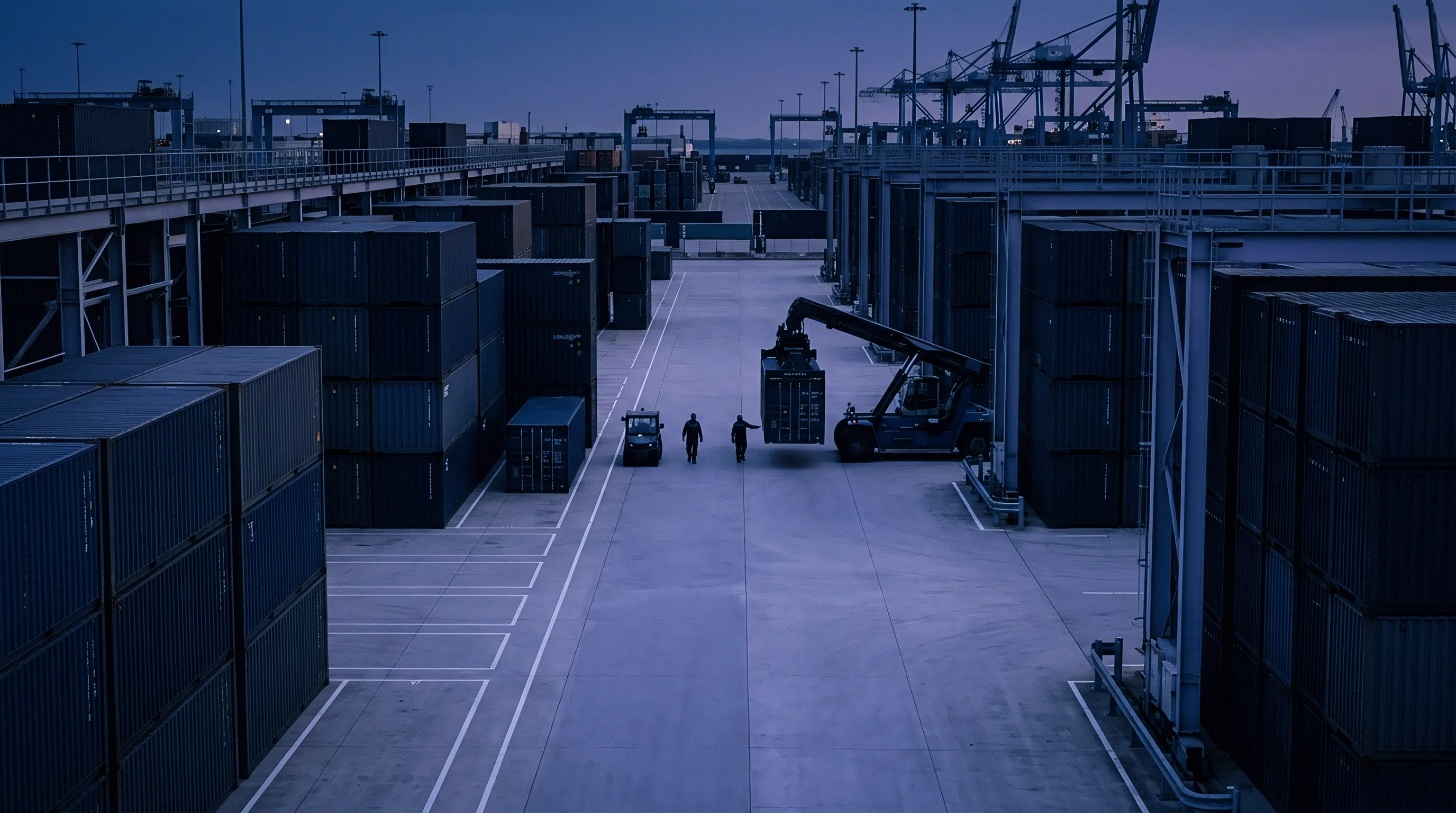
Intermodal shipping containers fill the illuminated freight terminal yard as a heavy reach stacker positions cargo between structural bays.

Analysis

Anchored by an 8.5 percent pay increase, the five-year agreement sets a predictable schedule for labor costs and terminal productivity. Keeping dockworkers on the job through the peak seasonal export push avoids picketed gates and idle cranes, while stabilizing berthing schedules at state facilities so shippers do not have to shift volume to private terminals with higher berth hire costs. Avoiding a stoppage also prevents a domestic equipment imbalance from developing across India.

An open warehouse looks out onto a remote mineral extraction site where a truck travels past stockpiles toward an interior staging table.

Parameters

  • Volume share ~ The twelve state controlled ports involved in the deal handle 54 percent of the total cargo in the nation.
  • Pay increase ~ 8.5 percent wage hike agreed upon in the settlement terms over five years.
  • Workforce scale ~ 20,000 port employees are covered by the new labor agreement.
  • Operational impact ~ Zero days of downtime occurred following the successful mediation.

Stacked industrial material samples sit under a flowing blue translucent polymer sheet in a digital render of supply chain logistics.

Outlook

Buyers should watch the formal signing ceremony of the Memorandum of Understanding to confirm all local union chapters accept the centralized terms. Procurement desks will need to track how quickly container backlogs clear at Nhava Sheva and monitor local port congestion indices through September to confirm terminal gates operate at standard capacity.

A single black protective work boot stands on a dusty industrial floor near a blue metal bin in a warehouse.

Verdict

Indian supply chain reliability remains steady as the national wage settlement eliminates the risk of an operational shutdown at major gateways.

Signal Acquired from: The Economic Times

Nomenclature

South Asian Shipping

Corridor Dynamics ~ Regional maritime mobility denotes the collective throughput of commercial vessels transiting coastal waters between Karachi and Chittagong.

Export Scheduling

Shipment Sequencing ~ Export scheduling coordinates outbound cargo dispatches against vessel arrival windows and terminal handling capacity.

Maritime Operations

Shipment Governance ~ Coordination of deep sea transit and port terminal handling defines maritime operations as a complex logistical framework that synchronizes vessel movement with landside cargo discharge.

Labor Union Negotiations

Wage Mechanics ~ Collective bargaining sessions determine baseline compensation models across industrial supply chains.

Trade Flow Maintenance

Operational Baseline ~ Cargo throughput calibration stands as an administrative threshold that governs inventory velocity across bonded terminals and stops applying once goods clear final customs inspection.

Freight Reliability

Schedule Performance ~ Punctual delivery acts as the primary requirement for supply chain operations across global logistics networks.

Container Logistics

Intermodal Transport ~ Coordinated maritime, rail, and trucking operations govern the physical repositioning and handling of standardized freight boxes worldwide.

Port Labor Relations

Contractual Framework ~ Collective bargaining agreements between maritime employers and dockworker unions define the operational parameters for moving cargo through a facility.

National Port Authority

Regulatory Oversight ~ Government bodies holding jurisdiction over maritime infrastructure manage cargo flow and waterway safety through this national port authority.

Logistics Management

Operational Oversight ~ Coordination of the movement and storage of goods within a firm ensures that inventory reaches the intended destination at the minimum cost while satisfying performance requirements.

Cargo Handling Capacity

Throughput Metric ~ Terminal operators quantify the maximum volume of goods capable of processing within a fixed timeframe to assess infrastructure performance.

Wage Settlement

Contractual Outcome ~ Collective bargaining agreements define the specific financial obligations between an employer and a unionized workforce.

What the firm knows, published

Expertise is a utility, not a secret. sentiention™ publishes its working knowledge as open reference: intelligence layer covering the materials it sources, the markets it enters, and the reference that serves both.