Shipment Governance
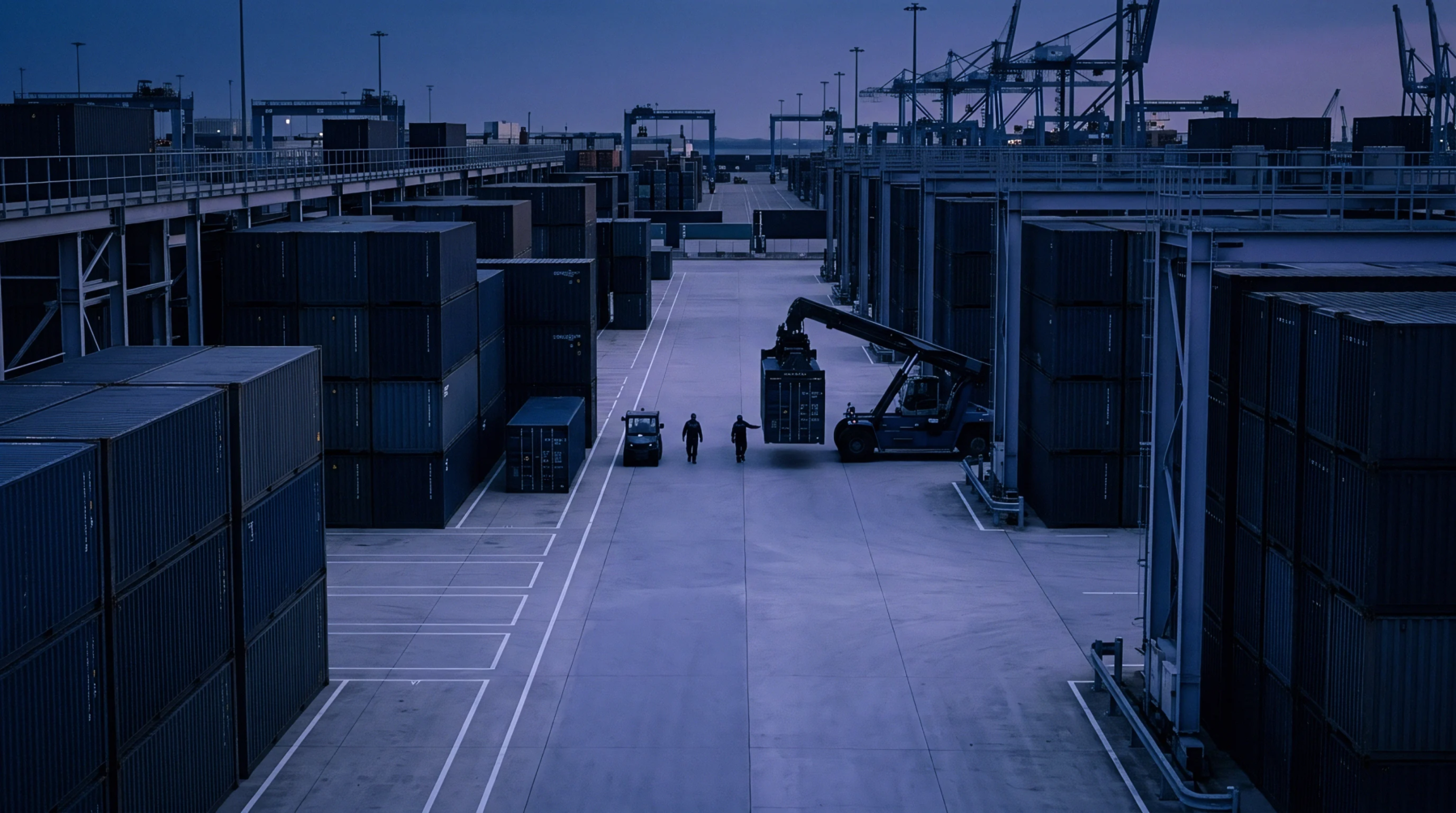
Coordination of deep sea transit and port terminal handling defines maritime operations as a complex logistical framework that synchronizes vessel movement with landside cargo discharge. Professionals manage maritime operations by sequencing arrivals against berthing capacity and labour availability. Terminal throughput relies on the efficiency of these interactions.
High volumes of containerized freight necessitate precise scheduling to prevent congestion at the quay wall. Infrastructure capacity limits the total tonnage moving through a gate. Decisions regarding berth allocation dictate the speed at which vessels clear their holds.
Planners monitor the status of crane utility and stacking yard density to identify bottlenecks before arrival times collapse.
Industry Cadence
Market actors observe the cycle of maritime operations through the recurring pulse of freight billings and vessel chartering agreements. Reporting occurs on daily or weekly intervals to capture price variance for spot and contract voyages. Freight rates fluctuate according to ship supply and global demand for raw material transport.
Analysts track bunker fuel expenditures alongside port fees to determine the cost basis for a typical delivery leg. Volatility in energy markets pushes shipping companies to adjust transit speeds, altering the flow of goods across oceans. Revised figures appear when discrepancies emerge between manifest data and actual cargo weights tallied at the terminal scale.
Corrective action involves rerouting vessels or renegotiating detention and demurrage terms to mitigate financial loss. Owners adjust fleet deployment to match changes in seasonal trade patterns. Data accuracy improves when digitised logs replace manual record keeping for vessel manifests and harbour activity.
Transit Constraint
Regulatory compliance within maritime operations establishes the boundaries for acceptable performance in international waters and territorial jurisdictions. Authorities enforce ballast water treatment and emission limitations to curb the environmental impact of long haul shipping. Operators align their procedures with maritime laws to maintain valid insurance and hull certification.
Compliance costs change when new technical requirements force retrofits on older tonnage. Vessel age determines the ease of satisfying current standards for noise reduction and waste disposal. Efficiency improves when ship design matches the draft requirements of a specific regional port authority.
Effective control of sea lane transit ensures the predictability of global supply chains.