Invista Consolidates Nylon 66 Operations to Canada and China

Nylon 66 yarn and fabric supply chains consolidate as Invista closes plants in the United States and United Kingdom.

28.08.26 2 min

Briefing

Invista is shutting down its precision processing workshop in Martinsville, Virginia, alongside its Gloucester plant in the United Kingdom, consolidating industrial nylon fiber and fabric operations at its facility in Kingston, Canada. The closures eliminate 150 jobs and shift supply lines for industrial nylon 66 yarn, airbag fiber, and heavy-duty fabrics out of higher-cost operating environments in the United States and Europe. Sourcing managers face changing lead times and revised logistics corridors for specialized polymer fabrics, while watching for volume growth in China, where Invista is seeking to expand.

Folded textile samples and hanging fabric swatches are arranged on a dark slate staging surface within a structured metal framework.

Context

Procurement teams were already navigating heavy supply imbalances and declining pricing across the nylon 66 value chain. The central question was how long Western chemical producers would maintain unprofitable domestic output before pulling back to lower-cost hubs. By late 2025, Chinese production capacity for nylon 66 was approaching 1.5 million tons annually, dragging spot prices down to multi-year lows.

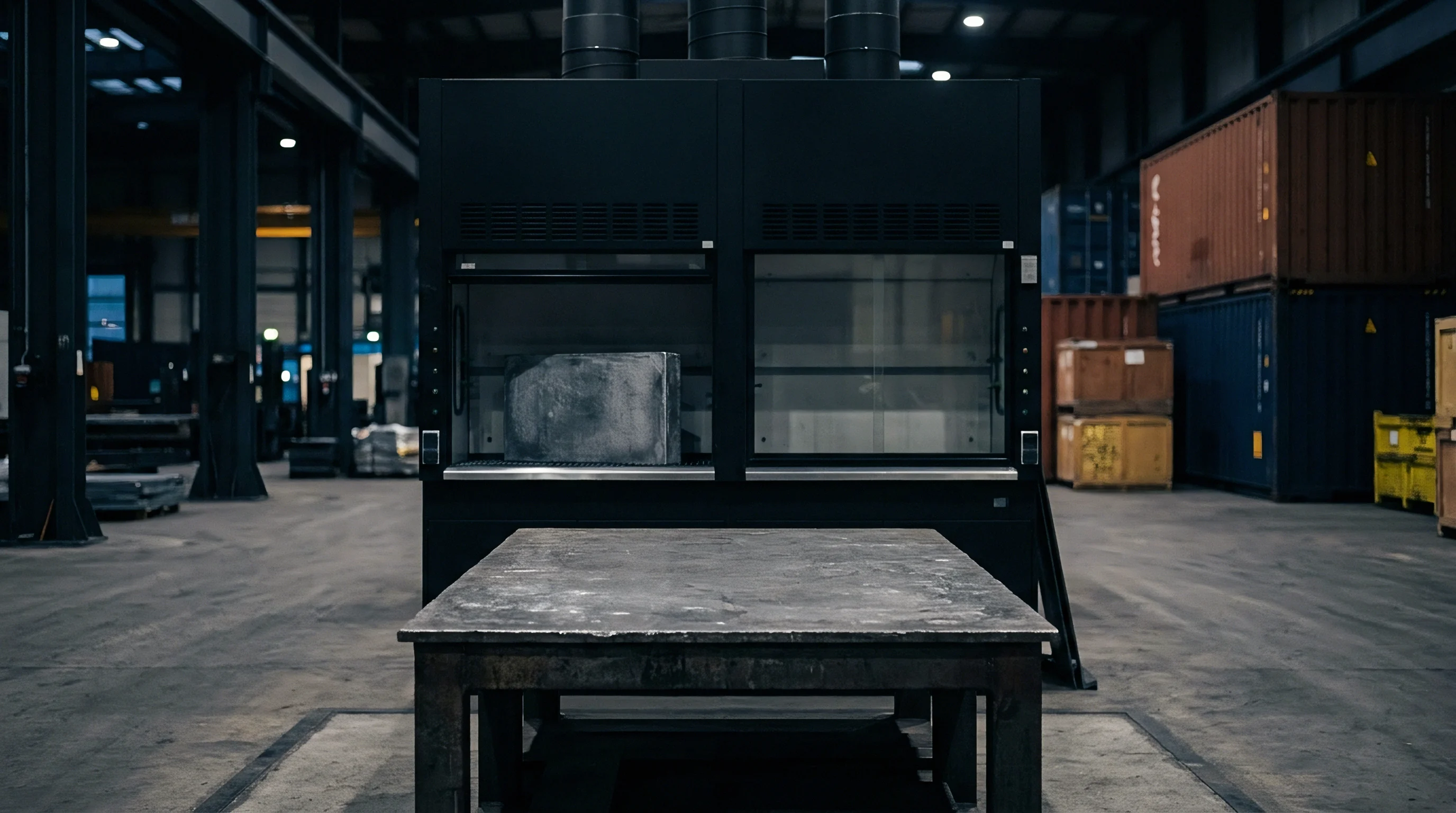
A man in a dark jacket discusses industrial control units and ventilation system ducting on an industrial platform at night.

Analysis

The plant closures follow a rapid buildout of intermediate raw materials ~ specifically adiponitrile and hexamethylenediamine ~ across the Asia-Pacific region, which broke long-standing supply bottlenecks and eroded polymer pricing. Nylon 66 manufacturing historically depended on centralized, capital-intensive chemical chains. Once Chinese suppliers cleared those constraints, local nylon 66 polymer spot prices fell to 15,500 RMB per ton, making older, high-cost lines in the United States and the United Kingdom unviable. Buyers accustomed to domestic fulfillment from Virginia or England will now need to route orders through the Canadian plant or rely more heavily on Chinese export channels.

A solitary worker stands inside a vast industrial warehouse facing a heavy yellow terminal tractor positioned near a concrete structural ramp.

Parameters

  • Affected Positions ~ 150 jobs lost across the closed facilities in Martinsville and Gloucester.
  • Nylon 66 Spot Price ~ 15,500 RMB per ton, set as the benchmark by major chemical suppliers at the start of 2026.
  • Consolidation Facility ~ Kingston, Canada, which now serves as the central production hub for North American and European nylon 66 fiber contracts.
  • Chinese Production Capacity ~ 1,500,000 tons annually, driving the broader regional supply surge.

A digital render shows a heavy cargo ship and wooden crate resting on cracked ice inside a concrete industrial basin.

Outlook

Over the coming quarters, buyers should plan for extended delivery windows and potential customs friction as active volume transitions to Canada. Sourcing teams will need to track Shanghai export volumes for industrial nylon yarn to see whether other Western chemical producers begin offshoring extrusion assets. Rising Chinese export figures alongside elevated container rates would confirm a structural shift across technical textiles, warranting an immediate reassessment of safety stock levels.

An inspector stands on a metal catwalk within a circular concrete bulk storage facility under a radial steel support structure.

Verdict

Procurement teams must reprice long-term nylon 66 contracts and adjust textile sourcing strategies to account for longer ocean transit times and concentrated production in Canada and China.

Signal Acquired from: INVISTA

Nomenclature

Technical Textiles

Engineered Material ~ Fiber-based materials, woven structures, nonwovens, and knitted fabrics are engineered specifically to provide mechanical, thermal, electrical, or chemical functions in specialized industrial and commercial applications.

Asian Chemical Capacity

Production Scope ~ Regional manufacturing output defines the volume of synthesized substances available within the eastern industrial corridor of the global market.

Supply Chain Restructuring

Structural Redistribution ~ Corporate re-engineering alters manufacturing nodes and freight routing simultaneously across global networks.

Performance Fibers

Specialty Filament ~ Highly oriented synthetic or inorganic filaments engineered with exceptional molecular alignment deliver extreme tensile strength, high modulus, thermal stability, or chemical inertness far exceeding standard commodity fibers.

Industrial Textiles

Functional Substrate ~ Engineered fiber structures, heavy-duty fabrics, and composite textile matrices are manufactured primarily for technical, mechanical, and operational performance rather than aesthetic appearance.

Global Sourcing Strategy

Operational Blueprint ~ Multinational enterprises establish a global sourcing strategy to allocate manufacturing and material procurement across multiple international jurisdictions.

Nylon 66 Polymer

Polyamide Resin ~ A semi-crystalline engineering thermoplastic synthesized through the polycondensation of hexamethylenediamine and adipic acid provides exceptional mechanical stiffness, wear resistance, and thermal endurance.

Adiponitrile Supply

Chemical Flow ~ Industrial movement of adiponitrile supply operates as a critical pipeline balancing regional production outputs against downstream nylon synthesis demand.

Synthetic Fiber Sourcing

Procurement Protocol ~ Strategic commercial procurement operations evaluate, negotiate, and purchase synthetic filament yarns, staple fibers, and specialized polymer resins from chemical fiber manufacturers.

Hexamethylenediamine

Monomer Precursor ~ An aliphatic diamine featuring a six-carbon alkylene chain bounded by terminal amino groups acts as a primary chemical precursor in high-performance polyamide synthesis.

Trade Corridor Rebalancing

Freight Realignment ~ Structural and operational shifts redirect commercial container, bulk, and intermodal freight volumes across alternate maritime shipping lanes, overland transport corridors, and port gateways.

Fiber Grade Polymers

Resin Specification ~ Specialized thermoplastic pellets engineered with controlled molecular weight distributions, high chemical purity, and precise rheological properties provide the raw material base for industrial filament and staple fiber extrusion.

What the firm knows, published

Expertise is a utility, not a secret. sentiention™ publishes its working knowledge as open reference: intelligence layer covering the materials it sources, the markets it enters, and the reference that serves both.