Conformity Verification
The systematic operational techniques, inspection routines, and empirical testing protocols executed across a manufacturing process to verify that produced units satisfy predetermined technical specifications define production compliance. Designated across industrial manufacturing and assembly operations as quality control, this operational discipline prevents defective raw materials, non-conforming intermediate assemblies, and off-spec finished goods from proceeding to subsequent manufacturing steps or customer delivery. It governs physical part dimensions, chemical purity levels, tensile strength properties, and visual appearance parameters.
The parameter ends where broad management governance systems begin, maintaining its focus on direct physical measurement, testing, and acceptance verification.
Inspection Methodology
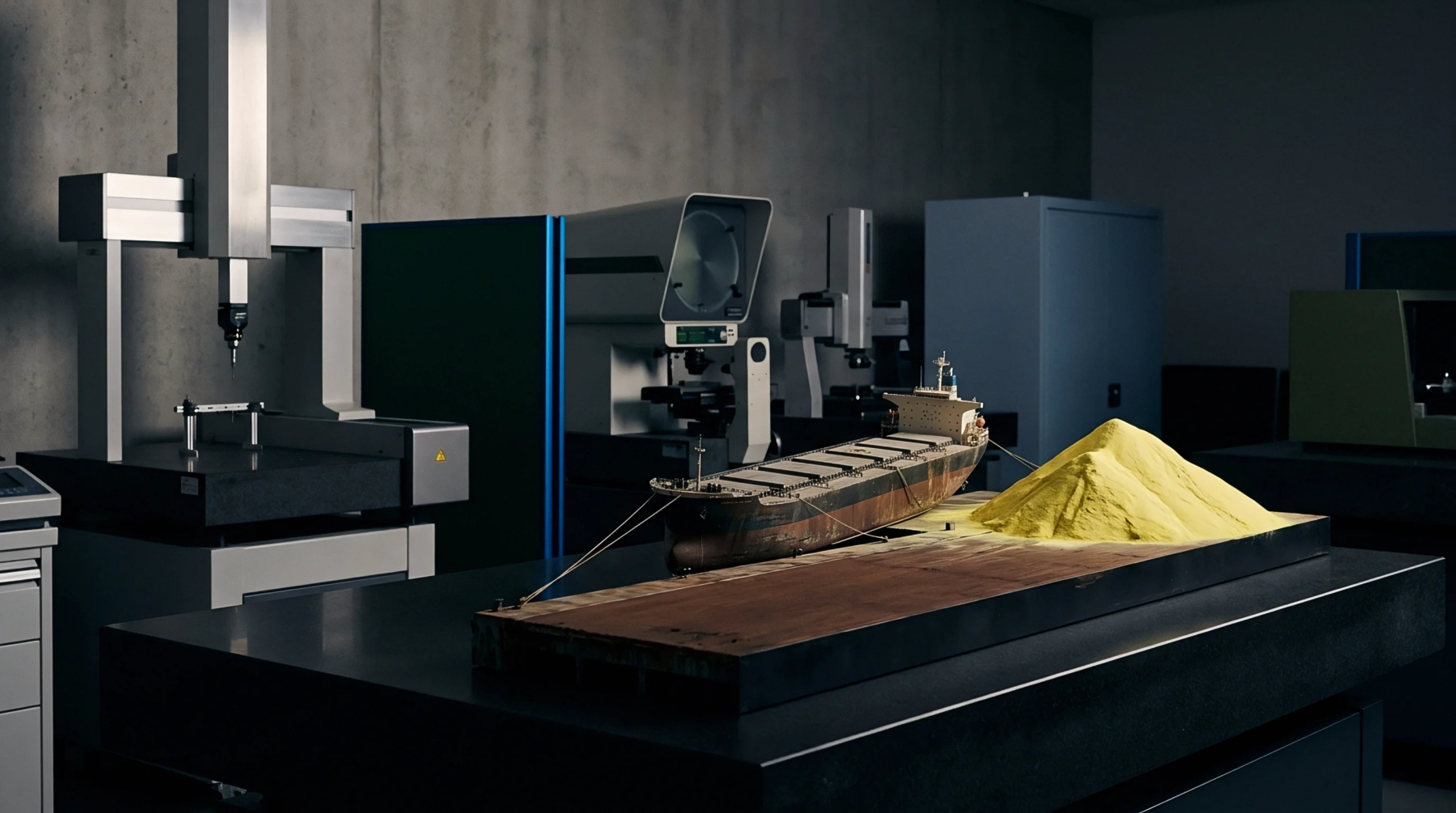
Operational execution relies on statistical process control, automated in-line inspection tools, and scheduled offline laboratory testing to identify process variations. Receiving inspection verifies incoming raw materials against technical data sheets and approved sample parameters, utilizing coordinate measuring machines, optical micrometers, and analytical spectroscopy. In-line sensors monitor process parameters such as extrusion temperature, coating thickness, and part dimensions in real time, alerting operators to mechanical drift before parts exceed allowable tolerances.
Finished lots undergo formal statistical sampling based on standard acceptable quality limit tables, determining whether entire production batches pass or face quarantine. Non-conforming items trigger immediate quarantine procedures to prevent mixed inventory, followed by formal root cause investigations to identify mechanical wear, operator error, or raw material variation.
Commercial Governance
Robust verification documentation serves as the legal and commercial basis for material acceptance under international trade contracts. Suppliers issue verified certificates of analysis and inspection reports with each delivery, documenting exact dimensional, physical, and chemical test values against agreed specification bands. Customers reserve the right to perform independent receipt testing, utilizing designated third-party testing laboratories to validate vendor claims and settle disputes over non-conforming shipments.
Failure to maintain rigorous inspection standards results in warranty claims, scrap generation costs, assembly line disruptions, and supplier disqualification from critical manufacturing programs. Quality verification protocols remain central to maintaining low defect rates in precision automotive, aerospace, and electronics supply networks.