USA Rare Earth Plant Secures Domestic Magnet Supply for Manufacturing

A new South Carolina plant establishes a domestic supply of neodymium magnets to protect buyers against import disruptions.

28.08.26 2 min

Briefing

USA Rare Earth has picked Cherokee County, South Carolina, for a manufacturing facility producing neodymium-iron-boron permanent magnets and refined metals. The site gives domestic buyers an alternative to overseas producers, who currently control nearly ninety percent of global supply. Automotive, aerospace, and energy sourcing teams stand to gain shorter delivery windows and less tariff exposure once commercial operations ramp up. Full design capacity is slated for 6,400 metric tons of sintered permanent magnets per year.

A heavy steel rigging post and a suspended spherical counterweight sit alongside a blue and white woven cargo strap on an industrial site.

Context

Procurement managers have spent years managing risks tied to an exceptionally concentrated magnet supply chain. Sourcing desks needed real hedges against trade friction and export restrictions on raw oxides, yet standard industry models assumed domestic manufacturers would remain dependent on imports indefinitely due to a total lack of local processing infrastructure.
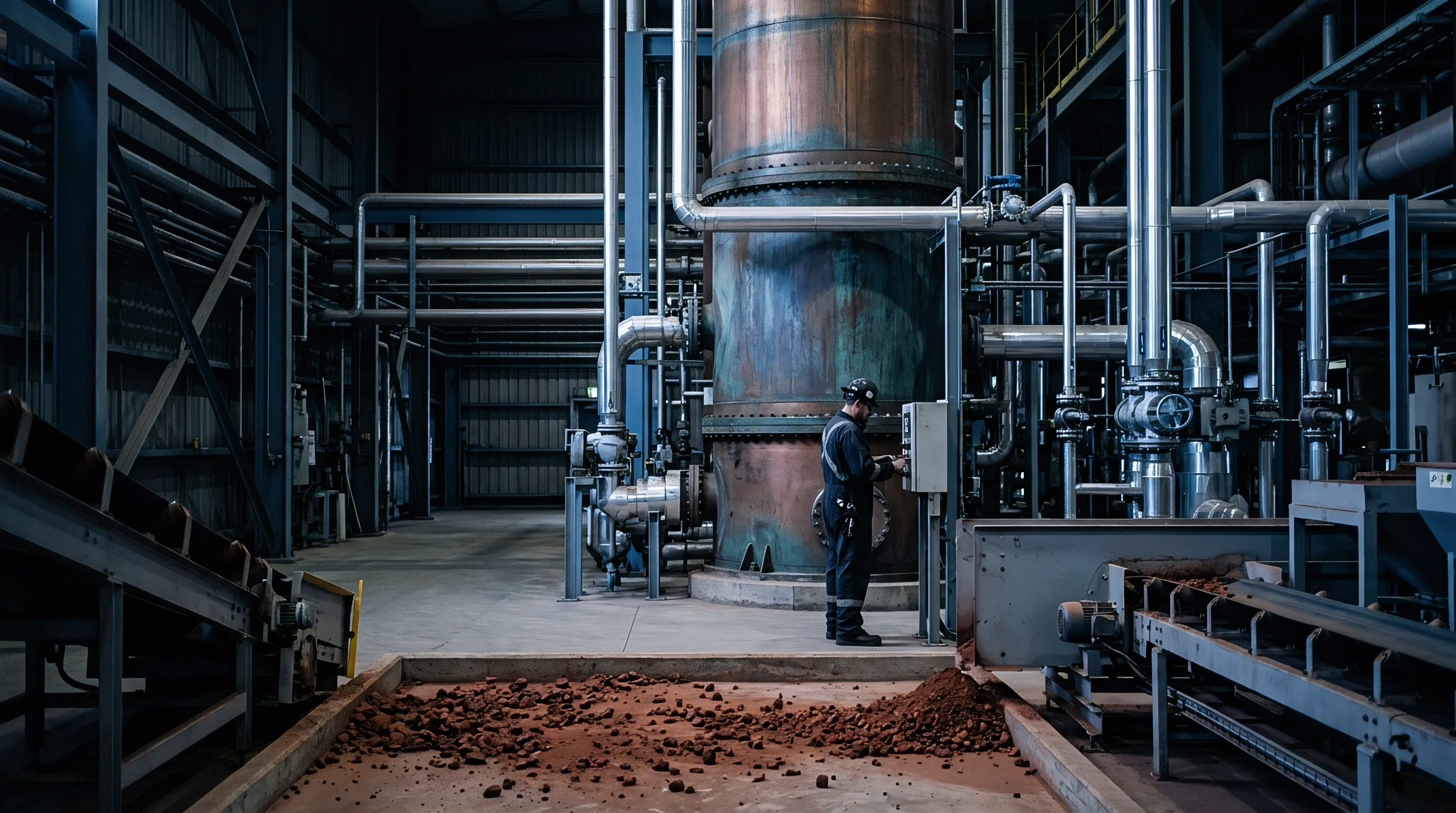
Operators monitor heavy industrial processing machinery within a mineral extraction facility handling raw earth materials through complex steel pipelines.

Analysis

Federal backing combined with trade policy pressures drove the Blacksburg buildout forward. Higher duties on imported materials are forcing supply chains onshore, and this site bypasses transoceanic freight entirely. Moving shipments from container ships to domestic freight trucks collapses lead times from months to days, giving buyers a direct buffer against port congestion and geopolitical trade disputes.

A brass padlock secures a painted steel hinge mechanism mounted near concrete panels and color specification cards beside a blue wall.

Parameters

  • Capital Investment ~ $1.2 billion committed to construct the Blacksburg facility.
  • Target Commissioning ~ April 2028 for the start of commercial production.
  • Annual Magnet Output ~ 6,400 metric tons of sintered neodymium-iron-boron permanent magnets.
  • Refinement Capacity ~ 5,000 metric tons of strip-cast metal and alloy.
  • Federal Financing ~ Up to $1.6 billion in loans and grants via the CHIPS Act.
A metallic industrial motor unit hangs from an overhead mechanical hoist inside a production testing facility before shipping.

Outlook

Sourcing teams should monitor upcoming corporate filings and local environmental permits as ground preparation begins in Blacksburg. Those milestones will indicate whether the build remains on schedule for its target launch. Procurement desks also need to audit their existing vendor contracts to align raw material commitments with the plant’s phased capacity ramp.
Mechanical testing apparatus secures a glass container holding a fine particulate sample inside a production laboratory facility.

Verdict

Procurement teams should prepare supply lines for domestic magnet volume ahead of the 2028 operational target to mitigate long-term foreign tariff exposure.

Signal Acquired from: USA Rare Earth

Nomenclature

Electronics Sourcing

Supply Chain Acquisition ~ Component procurement involves the selection and engagement of manufacturers or distributors to obtain hardware for assembly.

Supply Chain Security

Defense Framework ~ Protection protocols form a barrier around the physical and digital movement of materials across global borders to prevent unauthorized alteration or cargo theft.

Wind Turbine Manufacturing

Component Integration ~ Heavy industrial manufacturing operations integrate fiberglass composite blades, steel or concrete tower sections, heavy gearboxes and direct-drive generators into utility-scale wind power generation systems.

Manufacturing Capacity

Output Limit ~ Potential factory output over a specific period defines the upper limit of what a business can produce.

Metal Refining

Purification Standard ~ Industrial metallurgy defines the chemical removal of impurities from crude ores to achieve specific grades of elemental purity required for secondary manufacturing.

Neodymium Magnets

Permanent Composition ~ Rare earth alloys composed of iron, boron, and the element neodymium generate intense magnetic fields through their unique crystalline structure.

Domestic Supply Chain

Network Boundaries ~ Local logistics frameworks identify a unified sequence of production and delivery nodes that operate entirely within national borders to prevent the typical delays associated with cross-border customs or international trade regulations.

Industrial Procurement

Commercial Practice ~ Strategic sourcing, vendor qualification, commercial contracting and direct purchasing supply the capital equipment, raw materials and operational services needed for factory manufacturing.

Permanent Magnets

Material Composition ~ Metallic compounds that generate a persistent magnetic field without requiring an external electrical current are essential for modern energy conversion and motion control.

Rare Earth Metals

Classification Standards ~ Seventeen chemical elements categorized as lanthanides plus scandium and yttrium represent specific industrial materials essential for advanced magnetic, catalytic, and electronic applications.

Motor Components

Thermal Dynamics ~ Mechanical assemblies convert electrical current into kinetic force within industrial machinery while generating continuous heat dissipation during operation.

Industrial Magnets

Field Generation ~ Permanent magnet assemblies and electromagnets provide concentrated magnetic fields within industrial separation systems, heavy lifting cranes, electric motor drives and automated sorting lines.

What the firm knows, published

Expertise is a utility, not a secret. sentiention™ publishes its working knowledge as open reference: intelligence layer covering the materials it sources, the markets it enters, and the reference that serves both.