New European Industrial Truck Safety Rules Delay Machinery Shipments

Procurement teams must audit machinery suppliers to ensure compliance with the mandatory EN 1175 industrial vehicle standard.
28.08.26 2 min

Briefing

The EN 1175:2025 electrical safety standard is now mandatory for self-propelled industrial trucks. Forklifts, automated guided vehicles, and robotic kitchen logistics systems exported to the European Union must incorporate updated electrical and software safety architectures to clear customs. Equipment orders from non-compliant suppliers face border delays, rejected CE marking applications, and contract cancellations as older builds are turned back. Sourcing desks should audit suppliers now, since machinery built after the May 31, 2026, transition date cannot legally enter the EU market.
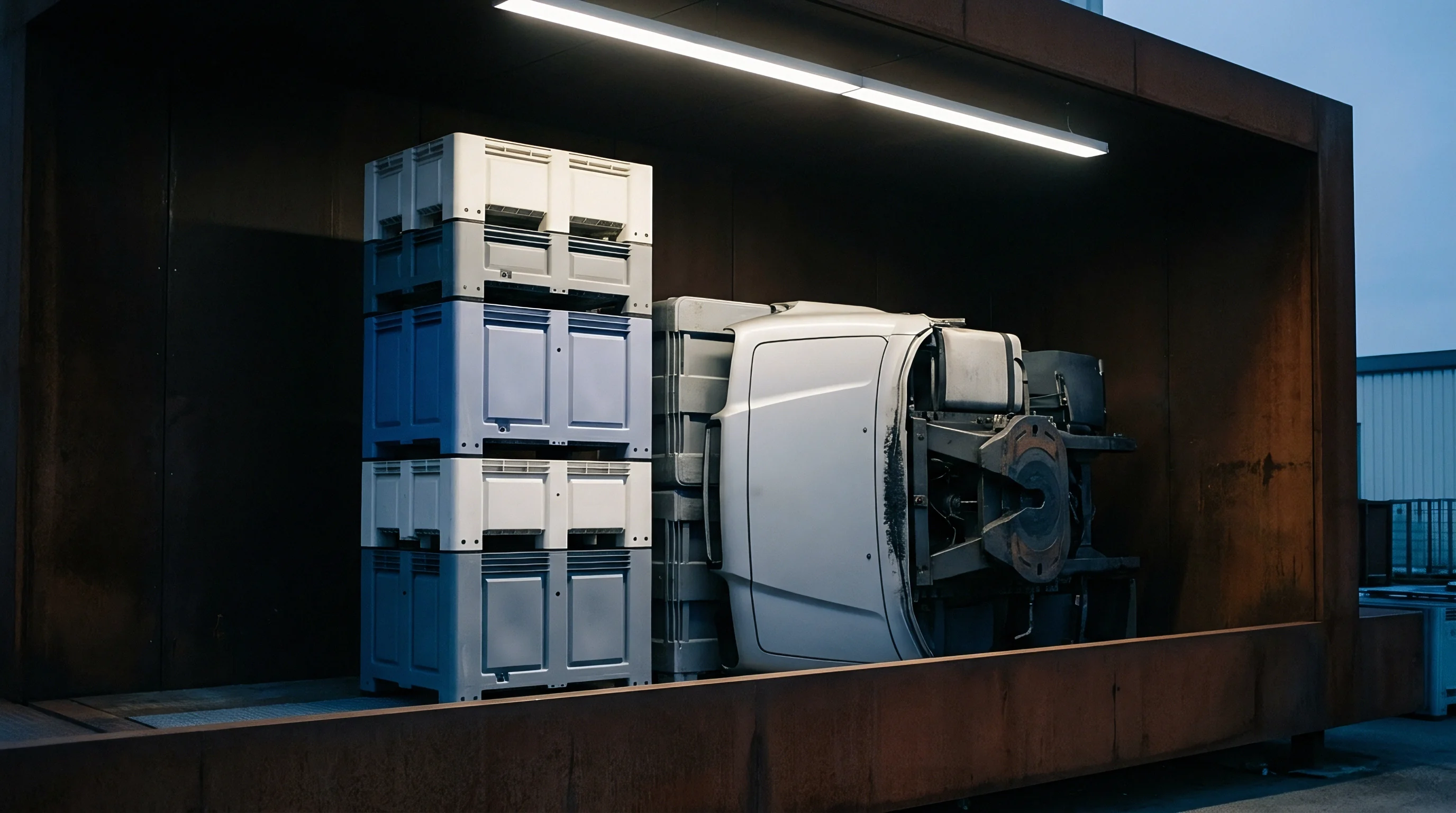
Stacked polymer bulk containers and a dismantled truck cab rest inside a weathered steel shipping enclosure illuminated by an overhead fixture.

Context

Procurement teams historically treated industrial truck purchases as routine, focusing mostly on battery capacity and mechanical lift capacity. Before this standard took effect, buyers assumed basic electrical insulation and overcurrent protection were enough for European market entry, relying on standard manufacturer self-declarations.
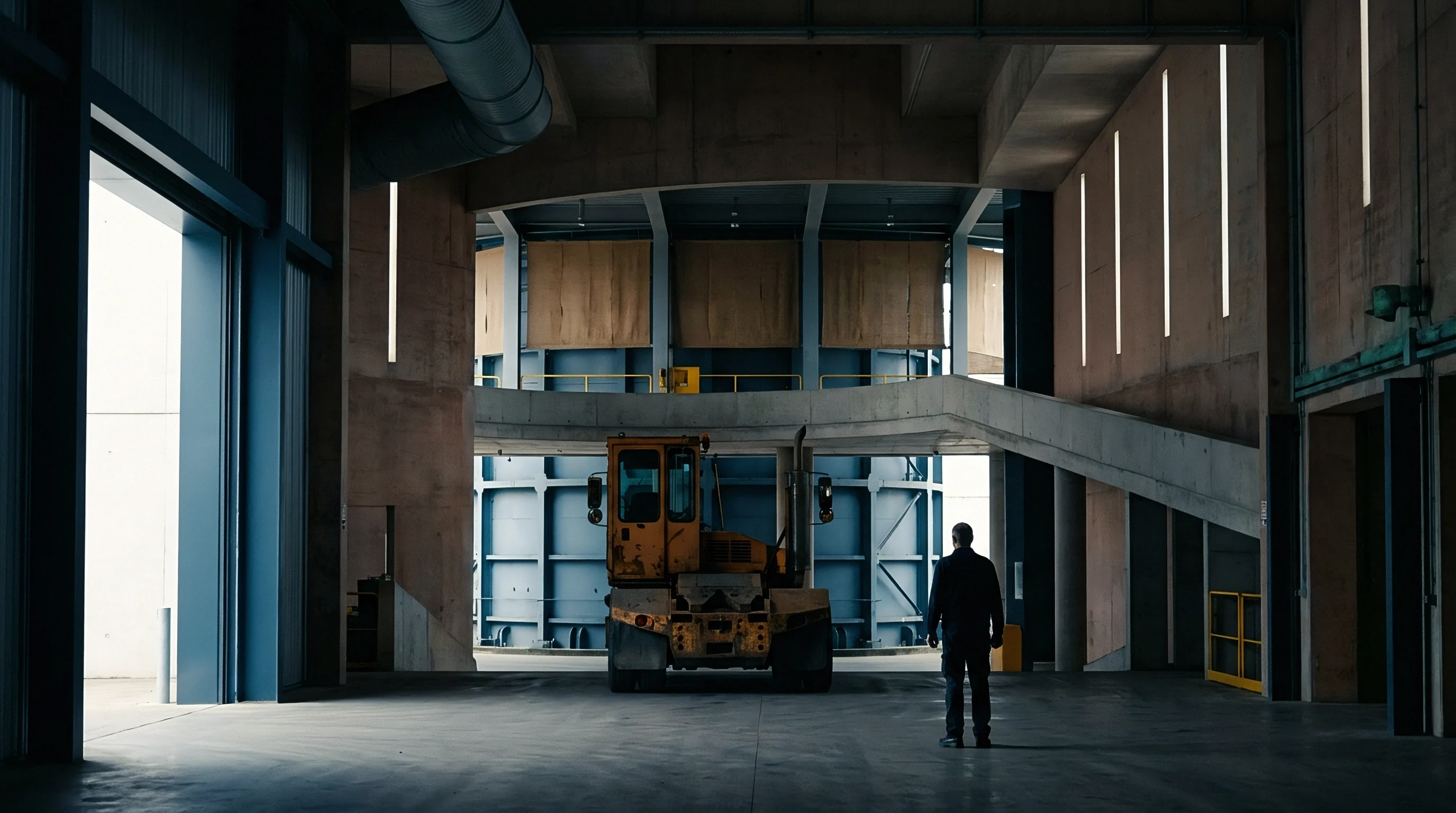
A solitary worker stands inside a vast industrial warehouse facing a heavy yellow terminal tractor positioned near a concrete structural ramp.

Analysis

The updated standard shifts scrutiny from physical insulation to system-level software accountability. Under EN 1175:2025, an automated vehicle’s software-driven maneuvers must satisfy European functional safety protocols, treating a digital guidance fault with the same severity as a physical brake failure. Meeting this requires overseas factories to redesign control boards, replace standard electronic valves with smart hydraulic actuators, and rewrite safety firmware. This splits the vendor base: compliant manufacturers will pass along higher component costs through price increases on finished models, while factories running outdated control systems will be shut out of European supply chains entirely.

Gray metal storage crates sit on a wooden floor in a dimly lit warehouse covered by protective blue fabric tarpaulins for transit protection.

Parameters

  • Effective Date ~ May 31, 2026, the deadline for EN 1175:2025 to take mandatory effect across the European Union.
  • Regulatory Linkage ~ EN ISO 13849-1:2023, the functional safety standard that industrial truck controls must now satisfy.
  • Superseded Rule ~ EN 1175:2020, the older electrical truck standard, now withdrawn and invalid.
  • Exempted Vehicle Classes ~ Rough-terrain variable-reach trucks and straddle carriers, which are governed by separate safety frameworks.

A weathered wooden pallet with rusted metal reinforcement leans against a heavy commercial truck tire resting on coarse concrete ground.

Outlook

Lead times on customized material handling equipment will likely stretch over the next two quarters as factories work through backlogs at certified European testing bodies. Procurement desks also need to track updates under Machinery Regulation (EU) 2023/1230, which takes effect in January 2027 and will further tighten functional safety rules for robotic machinery. Verifying the production date on every incoming shipment is the most reliable immediate defense against customs rejections.

A logistics worker sitting on wooden pallets adjusts heavy leather safety footwear inside an industrial warehouse environment.

Verdict

Procurement desks must halt industrial vehicle orders from any supplier unable to provide a certified test report demonstrating full alignment with the EN 1175:2025 standard.

Signal Acquired from: Fortune Kitchenware Newsroom

Nomenclature

Machinery Regulation Compliance

Regulatory Framework ~ Legal constraints and technical safety standards form the objective boundary for all industrial assets entering a commercial market.

Material Handling

Operational Mechanism ~ Industrial facilities execute physical displacement through material handling by deploying specialized machinery between receiving docks and assembly cells.

Autonomous Guided Vehicles

Operational Class ~ Industrial material handling equipment operating without a direct human driver relies on internal sensor arrays and software instructions to transport loads across fixed facility floors.

Safety Control Software

System Architecture ~ Programmable electronic platforms execute real-time monitoring of industrial machinery to prevent hazardous operating states.

Industrial Truck Safety

Accident Prevention ~ Operational rules for heavy material handling vehicles reduce collision risks in busy logistics environments.

European Market Access

Regulatory Entry ~ Compliance frameworks, technical certifications, and customs qualification processes that foreign and domestic manufacturers must satisfy to legally distribute industrial commodities within the European Single Market define trade entry across the continent.

Supply Chain Risk

Vulnerability Assessment ~ Procurement disruption probabilities describe the likelihood of external events damaging the continuity of material flows through global logistics networks.

Forklift Procurement

Asset Acquisition ~ Capital expenditure directed toward industrial lift equipment represents a major logistics outlay governed by multi-year replacement cycles and residual valuation models.

Electrical Safety Standards

Regulatory Prescriptions ~ Prescriptive mandates define the minimum requirements for the design, installation and maintenance of wiring systems to prevent fire and shock.

Equipment Certification

Regulatory Compliance ~ Official verification of industrial machinery confirms the alignment of a unit with established safety or operational benchmarks.

What the firm knows, published

Expertise is a utility, not a secret. sentiention™ publishes its working knowledge as open reference: intelligence layer covering the materials it sources, the markets it enters, and the reference that serves both.