Lenzing Closes European Lyocell Plants Squeezing Textile Fiber Supply

Textile buyers must shift sourcing of premium lyocell fibers to consolidated hubs as 135,000 tons of European capacity exits.


30.08.26 2 min

Briefing

Lenzing AG is shutting down fiber production at its factories in Heiligenkreuz, Austria, and Grimsby, United Kingdom. The move forces textile and apparel buyers to shift cellulose fiber supply chains away from European plants toward centralized global hubs. Shrinking the regional footprint leaves buyers dealing with longer transit times and tighter spot availability for specialized lyocell fibers. The closures remove a combined annual capacity of 135,000 tons from European production.

Heavy steel rigging hardware and coiled fiber cordage rest on industrial work surfaces awaiting deployment in supply chain operations.

Context

Before the announcement, procurement desks counted on stable European production and steady wood-based fiber prices to meet demand for eco-friendly apparel. Buyers generally expected regional supply chains to hold up despite high energy tariffs and rising chemical costs across Europe. The main uncertainty was how European fiber producers would absorb sustained inflation while competing against cheaper imports from Asia and the Middle East.

A brushed metal fastening plate is secured to a cylindrical rod mounted on a dark textured display board alongside textile swatches.

Analysis

High energy costs in Europe, combined with structural overcapacity and low-cost imports, squeezed profit margins on standard textile fibers. To protect its balance sheet, Lenzing AG introduced a strategy called “Grow Nonwovens, Reset Textiles,” shifting resources into nonwovens while exiting older textile plants. Sourcing volumes that previously came from European facilities will now have to be drawn from consolidated global hubs. Buyers accustomed to quick regional shipments need to order earlier, accommodate longer transport routes, and shift contract volumes to larger central sites. That pushes lead times out by weeks and raises price floors on smaller localized fiber orders.

Heavy industrial steel piping frames a compressed bale of raw organic fiber wrapped in burlap within a transit facility.

Parameters

  • Heiligenkreuz closure timeline ~ Sourcing from the Heiligenkreuz, Austria facility will stop by the end of 2026.
  • Grimsby closure timeline ~ Production at the Grimsby, United Kingdom facility will cease by the end of 2027.
  • Heiligenkreuz capacity exit ~ The Austrian facility is removing 90,000 tons of annual lyocell fiber capacity.
  • Grimsby capacity exit ~ The British facility is removing 45,000 tons of annual lyocell fiber capacity.
  • Job reductions ~ The manufacturer expects to cut approximately 2,000 positions globally to optimize overhead.
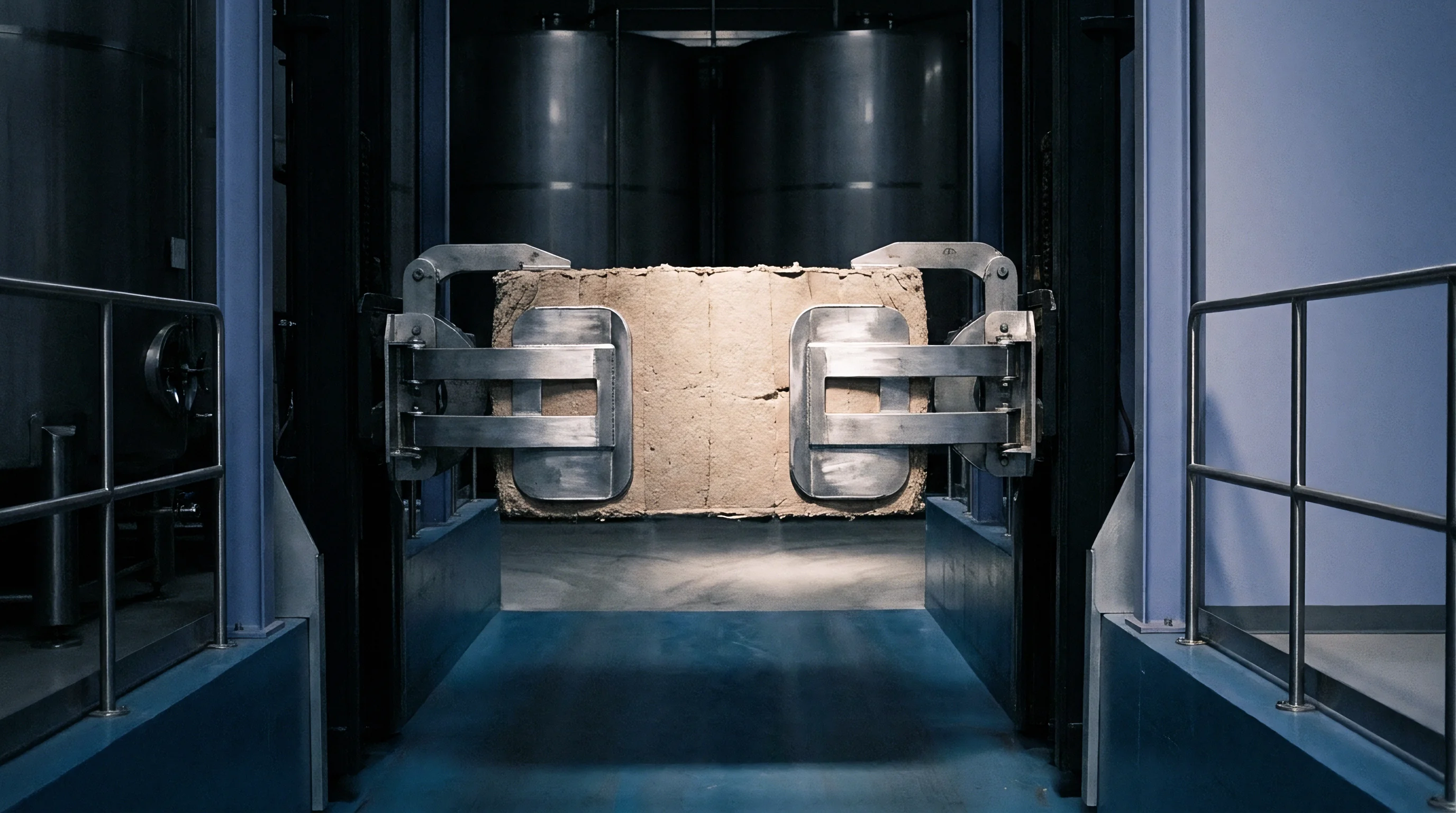
Heavy robotic mechanical clamps secure a dense rectangular compressed fiber block positioned centrally on an industrial factory floor.

Outlook

Over the coming quarters, localized fiber availability will tighten as the Heiligenkreuz plant moves toward its December 2026 shutdown. Procurement teams will need to watch autumn contract negotiations for man-made cellulosic fibers closely, as initial quotes from alternative hubs establish baseline costs for next year. The transition will test whether competing suppliers can absorb the lost volume without driving up prices.

An industrial quality auditor evaluates material samples arranged across a concrete factory floor beneath an elevated control booth.

Verdict

Buyers should immediately audit and reallocate European lyocell fiber contracts to consolidated Asian or Austrian hubs to secure volume well before the first plant closes in late 2026.

Signal Acquired from: Fashion United

Nomenclature

Yarn Supply Stability

Production Continuity ~ Spinning mill operating consistency and raw fiber availability maintain uninterrupted spun yarn delivery to downstream knitting and weaving operations.

Industrial Footprint Optimization

Production Efficiency ~ Resource utilization analysis defines the systematic reduction of energy consumption and waste generation within manufacturing environments.

Cellulose Fibers

Structural Class ~ Plant-derived polymers represent the primary structural component of natural cell walls used in industrial manufacturing.

Factory Footprint Consolidation

Structural Realignment ~ Manufacturing strategy often centers on the systematic reduction of active production sites to optimize capacity utilization.

Man-Made Cellulosic Fibers

Chemical Classification ~ Regenerated pulp polymers processed through chemical extraction and wet or dry-jet wet spinning yield bio-based regenerated textile fibers.

Fiber Market Dynamics

Trade Mechanism ~ Market clearing forces govern raw material pricing, crop yield forecasts, petrochemical feedstocks and global mill consumption trends.

Textile Manufacturing Capacity

Output Metric ~ Maximum production output within a given timeframe defines textile manufacturing capacity for industrial analysts tracking supply availability.

Apparel Supply Chain

Operational Architecture ~ Integrated production and distribution networks coordinate raw fiber transformation, fabric weaving or knitting, garment assembly and regional fulfillment.

Regional Capacity Contraction

Spatial Logistics Reduction ~ Fixed infrastructure assets within defined trade zones undergo periodic removals or operational lockdowns that reduce the maximum throughput of goods.

European Industrial Restructuring

Structural Shift ~ Manufacturing capacity reallocation across continental boundaries represents European industrial restructuring when high operational costs compel enterprises to relocate production lines from Western member states to jurisdictions offering lower factor expenses.

Global Textile Trade

Market Volume ~ International exchange involving woven materials, spun yarns and finished garments forms a vast economic artery connecting distant production sites to retail destinations.

What the firm knows, published

Expertise is a utility, not a secret. sentiention™ publishes its working knowledge as open reference: intelligence layer covering the materials it sources, the markets it enters, and the reference that serves both.