Panama Canal Transit and Draft Restrictions Limit East Coast Freight Capacity

Water limits at the Panama Canal will restrict Neopanamax vessel payloads and reduce available slot capacity in September.


30.08.26 2 min

Briefing

The Panama Canal Authority is walking back its pledge of unrestricted transits, capping daily passages at 34 vessels on September 4 and 32 on September 15 while cutting authorized drafts. This forces ocean carriers routing freight from Asia to the United States East Coast to lighten container loads or pay higher slot booking fees. The resulting squeeze reduces available capacity and triggers shipping surcharges for buyers through autumn. Because these combined limits hit 55 percent of nominal container capacity through the Neopanamax locks, transpacific buyers face a substantial cut in usable volume.

A digital cutaway model of a concentric freight transport hub sits indoors with railway tracks and cylindrical storage structures displayed clearly.

Context

Prior to these restrictions, procurement teams expected stable transpacific routing through the canal, relying on the authority’s earlier pledge to maintain open transits during the dry season. Shippers were weighing West Coast overland routes against East Coast ocean routings, with desks focused on whether East Coast rates would stay competitive into the fourth quarter.
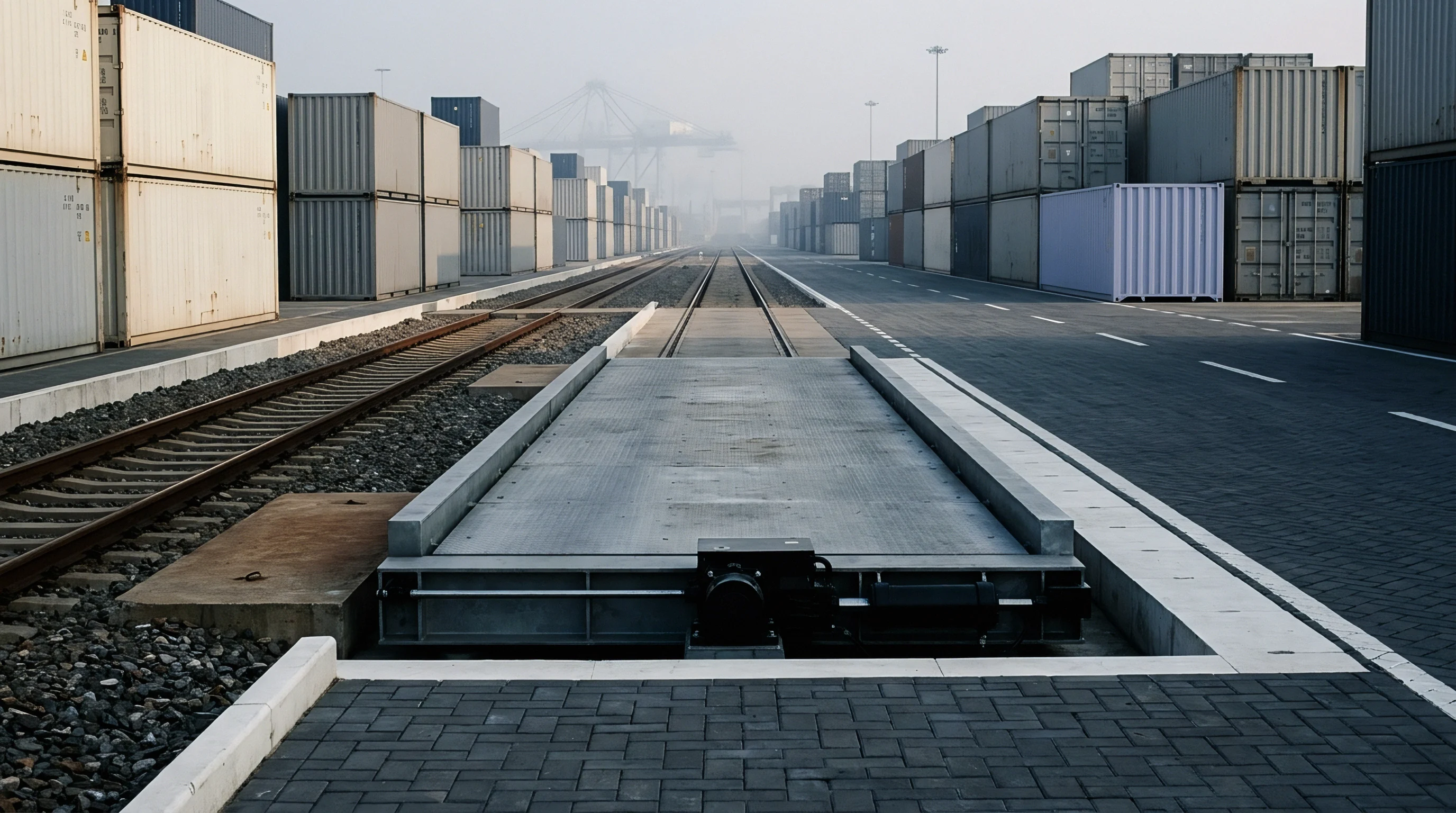
A digital render of an industrial intermodal freight yard containing a central weighbridge flanked by railway tracks and stacked shipping containers.

Analysis

Water levels in Lake Gatun are dropping under a strengthening El Niño pattern, pushing the canal authority to act defensively to preserve municipal and maritime water supplies. Disruption begins with draft restrictions: on September 2, permitted draft drops to 14.63 meters, falling further to 14.48 meters on October 1. Lower draft limits leave container ships running under capacity, much like delivery trucks forced to drive half-empty to avoid scraping bottom. Carriers must decide whether to leave cargo behind at Asian hubs or sail underloaded. That inefficiency raises slot costs per container, which carriers pass to importers through low water surcharges or general rate hikes. At the same time, cutting daily transit slots to 32 vessels builds a queue at the locks, pushing back East Coast delivery schedules by several days.

Gray metal storage crates sit on a wooden floor in a dimly lit warehouse covered by protective blue fabric tarpaulins for transit protection.

Parameters

  • Daily Transit Cap on September 15 ~ 32 vessels, representing the restricted daily passage volume across both locks.
  • Maximum Authorized Draft on October 1 ~ 14.48 meters, the depth limit Neopanamax vessels must adhere to.
  • Share of TEU Capacity Affected ~ 55 percent, showing the proportion of total nominal vessel capacity impacted by draft cuts.
  • CMA CGM Low Water Surcharge ~ 150 dollars per TEU, postponed to take effect on October 1.

Industrial mechanical assemblies featuring coiled steel springs and polymer mounts rest securely inside heavy metal containers within a dark logistics facility.

Outlook

Ocean freight buyers need to focus on October 1, when draft cuts and carrier surcharges take full effect. Desks should monitor daily waiting times at the canal locks to catch queue build-ups early. Tracking weekly spot rate indices on the Shanghai to US East Coast lane will show whether shippers are actively shifting cargo to West Coast intermodal routes.

A digital render shows a suspended freight package positioned between angled steel impact arms inside a dark industrial testing facility.

Verdict

Buyers should prepare for delayed East Coast arrivals and higher per-container costs by shifting time-sensitive cargo to US West Coast ports.

Signal Acquired from: The Loadstar

Nomenclature

Low Water Surcharges

Freight Mechanism ~ Compensatory pricing mechanisms applied by inland waterway carriers recover revenue lost when shallow river channels restrict vessel loading capacities.

Transport Bottlenecks

Physical Constraint ~ Flow restriction within a supply chain network occurs when demand exceeds the throughput capacity of a specific node or transit link.

Spot Freight Rates

Market Price ~ Transactional charges for immediate cargo movement define this pricing mechanism.

Canal Transits

Vessel Throughput ~ Passage events record the physical movement of individual ocean carriers across a maritime bottleneck under controlled administrative oversight.

Neopanamax Locks

Expanded Chamber ~ Engineering structures at the Panama Canal allow for the passage of vessels significantly larger than those accommodated by the original infrastructure.

Transpacific Shipping

Maritime Route ~ High-volume ocean shipping corridors connect the major manufacturing hubs of East Asia with the primary consumption centers of North America.

Weight Restrictions

Legal Threshold ~ Regulatory limits on cargo mass dictate the payload boundaries imposed by highway authorities and maritime registries to protect infrastructure integrity and ensure vessel stability.

Ocean Freight

Cargo Movement ~ Maritime transport provides the primary physical capacity for moving heavy industrial goods and bulk commodities across international waters on scheduled vessel routes.

Vessel Draft Limits

Hydrostatic Constraint ~ Vertical immersion depth determines the weight capacity of a marine vessel when operating within specific transit corridors.

Supply Chain Disruption

Operational Shock ~ Financial exposure from freight interruption represents an unexpected stoppage in material movement that breaks scheduled procurement cycles across industrial networks.

Shipping Logistics

Maritime Orchestration ~ Intermodal transport management coordinates the movement of goods across oceanic and terrestrial boundaries to optimize transit duration.

Slot Booking

Operational Coordination ~ Freight terminal operators rely on slot booking to manage vehicle arrival frequency and prevent highway queues outside loading docks.

What the firm knows, published

Expertise is a utility, not a secret. sentiention™ publishes its working knowledge as open reference: intelligence layer covering the materials it sources, the markets it enters, and the reference that serves both.