EU PET Spunbond Tariffs Raise Industrial Sourcing Costs

New European duties on Chinese polyester spunbond imports will raise costs for hygiene and filtration sourcing.


28.08.26 2 min

Briefing

Under Implementing Regulation (EU) 2026/1063, issued May 12, 2026, the European Commission has set provisional anti-dumping duties of 45.6% to 50.0% on Chinese polyester spunbond nonwovens. The tariffs force an immediate recalculation for European buyers running filtration, geotextiles, roofing, and hygiene lines. With importers required to post guarantees or pay at customs clearance, Chinese mills lose their cost advantage at the border, shifting volume back toward domestic producers.

The 50 percent upper rate remains the benchmark to watch.

An illustration features a wooden gavel on a circular sound block surrounded by raw timber sections, steel components, ceramic parts, and quartz minerals.

Context

Procurement desks had spent years treating cheap Chinese PET spunbond as a permanent fixture at the lower end of the market. Sourcing teams tracked shrinking European mill margins and openly questioned how long local producers could absorb the price gap. The new provisional duties cut that period short.
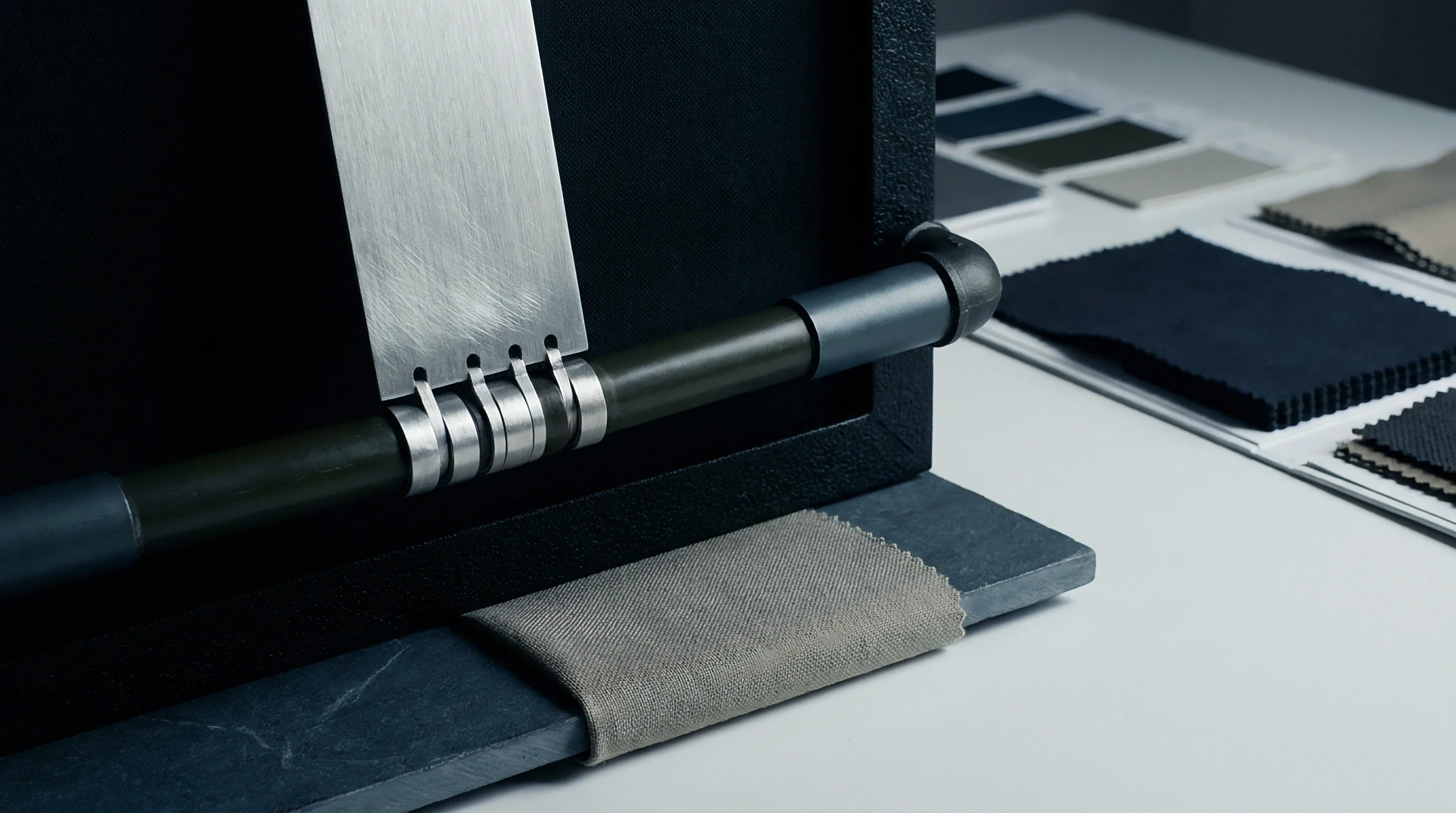
A brushed metal fastening plate is secured to a cylindrical rod mounted on a dark textured display board alongside textile swatches.

Analysis

The duties follow an anti-dumping investigation brought by European manufacturers, who showed that Chinese imports sold below cost were cutting deep into local industry margins. The Commission agreed, making the tariffs an immediate surcharge on landed volume. That direct cost lands squarely on contract pricing for filter media, hygiene sheets, and geotextiles.

As procurement shifts to domestic mills or alternative third countries, European plants will have trouble absorbing the sudden run on capacity, pointing to longer lead times across the nonwovens sector over the coming months.

An array of raw materials including wood, various minerals, metal plates, and electronic components rests on a dark industrial floor.

Parameters

  • Provisional Duty Rate ~ 45.6 percent to 50.0 percent on imported Chinese PET spunbond nonwovens.
  • Effective Date ~ May 13, 2026, entering into force across all EU member states.
  • Investigation Period ~ July 1, 2024 to June 30, 2025, which served as the benchmark for assessing dumping margins and domestic injury.
  • TARIC Codes Impacted ~ Classifications 5603 13 90 70 and 5603 14 80 70.

Precision mechanical assemblies and raw material swatches are arranged on a painted wooden workbench for industrial sourcing evaluation.

Outlook

Supply chains face a disorderly realignment over the next two quarters. The critical milestone is November 2026, when the European Commission decides whether to confirm the duties for a full five-year term. That determination dictates whether buyers must commit to long-term European supply contracts or continue parking cash against customs guarantees.

A row of metal stone and composite industrial test specimens stands on wooden blocks arranged along a dark steel shelf.

Verdict

Industrial buyers must immediately secure European nonwoven supply capacity to avoid tariff surcharges on imported Chinese PET spunbond.

Signal Acquired from: European Commission

Nomenclature

Chemical Fibers

Polymer Extrusion ~ Synthetic filaments originate from the industrial transformation of organic polymers into continuous strands for textile production.

Industrial Materials

Primary Category ~ Hard physical inputs traded on regional exchanges represent the foundational commodities consumed during manufacturing operations and civil construction projects worldwide.

Materials Pricing

Cost Estimation ~ Value determination method fixes the financial worth of raw commodities and components used in the production of finished goods.

Nonwoven Fabrics

Material Composition ~ Engineered sheet goods consisting of fibrous webs or batts bonded through mechanical, chemical, or thermal processes constitute the primary definition of this category.

Anti Dumping Duty

Trade Correction ~ Regulatory authorities levy an anti dumping duty upon imported merchandise when domestic investigations prove the foreign producer sells goods below normal value within the destination market.

European Trade Policy

Statutory Framework ~ Customs union rules and common commercial regulations define how european trade policy governs the external exchange of goods.

Trade Protection

Tariff Structure ~ Trade protection operates as a system of government interventions designed to shelter domestic producers from foreign competition by raising the cost of imported goods.

Geotextiles

Permeable Fabric ~ Synthetic polymer sheets provide civil engineering with mechanical separation and fluid filtration control that prevent base layer erosion under heavy traffic loads.

Industrial Filtration

Separation Efficiency ~ Mechanical separation systems remove suspended solid particulate, liquid droplets, or gaseous contaminants from fluid streams using porous physical media.

European Customs

Border Protocol ~ Regulatory inspection at a sovereign frontier governs the physical entry of foreign goods into a trading zone.

Import Tariffs

Fiscal Charge ~ Border levied financial duties apply to the value or quantity of goods as they enter a national territory.

Textile Sourcing

Vendor Selection ~ Strategic purchasing, vendor qualification and production allocation secure yarns, woven fabrics, knit materials and finished textile products from global manufacturing networks.

What the firm knows, published

Expertise is a utility, not a secret. sentiention™ publishes its working knowledge as open reference: intelligence layer covering the materials it sources, the markets it enters, and the reference that serves both.