New Section 232 Program Offers Half-Price Aluminum Imports for Domestic Investment

Buyers can halve their aluminum import tariffs to 25% by committing to build or expand domestic smelting capacity before 2029.


27.08.26 2 min

Briefing

On July 20, 2026, a presidential proclamation revised the Section 232 aluminum tariff framework, linking lower duty rates directly to domestic infrastructure spending. Buyers committing to build, expand, or restart domestic smelters can submit onshoring plans to the Department of Commerce to secure firm-specific import quotas. Qualifying participants will see their Section 232 tariff cut from 50 percent to 25 percent. By granting approved operators discounted metal while competitors pay the full rate, the policy turns a standard trade penalty into an incentive for capital investment in domestic processing.

A digitally rendered scene shows a substantial gold bullion bar progressing through an automated industrial scanner.

Context

Procurement desks have spent the year watching effective metal tariffs climb. For primary aluminum, the central problem has been a structural domestic smelting deficit that forced manufacturers to import heavy volumes regardless of the duty burden. That left sourcing teams weighing whether the administration would push metal tariffs higher still or grant broad country-level exemptions to ease raw material costs across industrial plants.
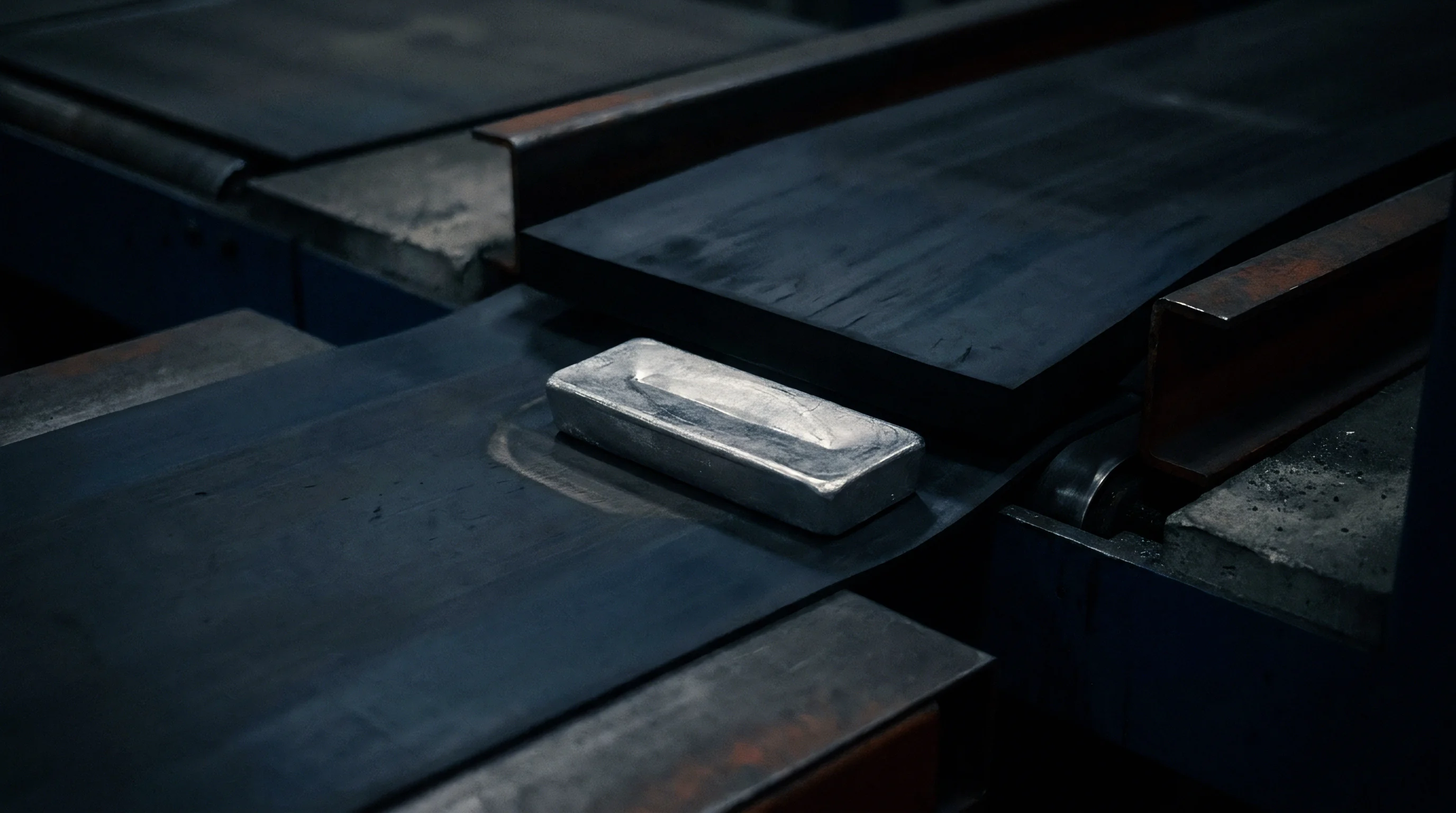
A rectangular metal ingot sits on a dark moving conveyor belt within a heavy manufacturing facility.

Analysis

The policy sets up a two-tier market to drive investment into domestic smelting. Under the program, the Department of Commerce requires an onshoring plan with a firm commitment to begin construction by January 20, 2029. Approved plans receive a tailored import allowance of lower-tariff metal scaled to the prospective facility’s projected annual output. This establishes a sharp cost divide: firms with approved plans secure raw material at a discount, while competitors without domestic investments pay the full 50 percent tariff. That gap will flow directly into contract negotiations, shifting component pricing and margin forecasts across supply chains.

Metallic framing encloses a biometric impression alongside dark industrial particulates and copper filaments on a dark surface.

Parameters

  • Baseline Duty Rate ~ The standard 50 percent tariff on imported primary aluminum.
  • Reduced Duty Rate ~ The 25 percent tariff available to companies with approved domestic investment plans.
  • Construction Deadline ~ January 20, 2029, the cutoff to begin building or expanding a domestic smelter.
  • Product Eligibility ~ Raw primary aluminum qualifies for the program, while finished aluminum derivatives remain excluded from the tariff reduction.

Heavy steel railway tracks rest on wooden ties above crushed stone ballast alongside a metal collection pan during freight yard maintenance.

Outlook

Buyers should monitor the Federal Register for upcoming Department of Commerce rules setting out submission procedures and evaluation criteria for onshoring plans. The pace of the rollout will determine how quickly producers can tap the lower tariff quotas. Sourcing managers will need to track these filings to gauge when the first eligible volumes of discounted metal reach the market and begin influencing regional premiums.

A high precision digital render shows a modular robotic production cell elevated above an industrial sorting framework in a dark warehouse environment.

Verdict

Industrial metal buyers must evaluate joint capital ventures with primary smelter operators to secure discounted aluminum supply and avoid the full 50 percent tariff.

Signal Acquired from: The White House

Nomenclature

Customs Duties

Taxation Framework ~ Mandatory tax levies imposed by a national government on imported and exported goods determine the final landed cost of international trade transactions.

Import Tariffs

Fiscal Charge ~ Border levied financial duties apply to the value or quantity of goods as they enter a national territory.

Supply Chain Resilience

Operational Continuity ~ Logistics infrastructure stability defines the capacity of international freight systems to maintain movement despite sudden external shocks or system failures.

Industrial Materials

Primary Category ~ Hard physical inputs traded on regional exchanges represent the foundational commodities consumed during manufacturing operations and civil construction projects worldwide.

Smelter Investment

Capital Intensity ~ Capital allocated to heavy industrial hardware represents a fixed commitment to long-term production capacity for raw metal refining.

Capital Expenditure

Financial Outlay ~ Corporate funds allocated to acquire, upgrade, or extend the productive operational lifespan of fixed physical assets form the baseline of long-term industrial capacity expansion.

Raw Material Sourcing

Material Acquisition ~ Raw material sourcing functions as the procurement practice through which manufacturing organizations secure the physical substances and natural inputs required for production schedules.

Primary Aluminum

Smelter Input ~ Unalloyed metal originating directly from electrolytic reduction cells represents the initial commercial form of primary aluminum before remelting or alloying alters its properties.

Section 232 Duties

Import Surcharge ~ National security legal authorities allow for the application of additional tariffs on specific foreign metal products.

Tariff Relief

Duty Mitigation ~ Legally structured trade policy instruments, duty suspensions, tariff-rate quotas, and administrative customs mechanisms that reduce or eliminate import taxes on specified foreign goods define fiscal mitigation in international logistics.

Domestic Smelting Capacity

Metal Output ~ Domestic smelting capacity represents the maximum aggregate tonnage of refined base metals that national industrial installations can produce annually from domestic or imported concentrates.

Onshoring Incentives

Fiscal Subsidy ~ Financial relief mechanisms deployed by sovereign states alter corporate calculus by lowering the net capital expenditure required to relocate offshore manufacturing facilities back to domestic industrial zones.

What the firm knows, published

Expertise is a utility, not a secret. sentiention™ publishes its working knowledge as open reference: intelligence layer covering the materials it sources, the markets it enters, and the reference that serves both.