EU ABS Plastic Tariffs Reshape Sourcing for Appliance and Automotive Buyers

Definitive duties of up to 21.7 percent on Korean and Taiwanese ABS will lift landed costs for European manufacturers


28.08.26 2 min

Briefing

On February 13, 2026, the European Commission imposed definitive anti-dumping duties on imports of acrylonitrile butadiene styrene ~ a resilient engineering plastic used in vehicles and appliances ~ originating from the Republic of Korea and Taiwan. The decision raises landed resin prices for European manufacturers, upending established pricing structures and pushing buyers toward domestic producers. Prior to the decision, Korean and Taiwanese suppliers held a 31 percent market share of EU ABS imports.

Leather protective gloves and a polished aluminum fitting rest beside a black bucket on a wooden bench inside a facility locker room.

Context

Heading into this decision, European procurement teams had been tracking a steady inflow of low-cost resin imports. Buyers in the region relied on Asian suppliers to hedge against price increases from domestic producers. The central question for buyers was whether provisional duties set in mid-2025 would become permanent or be allowed to lapse.
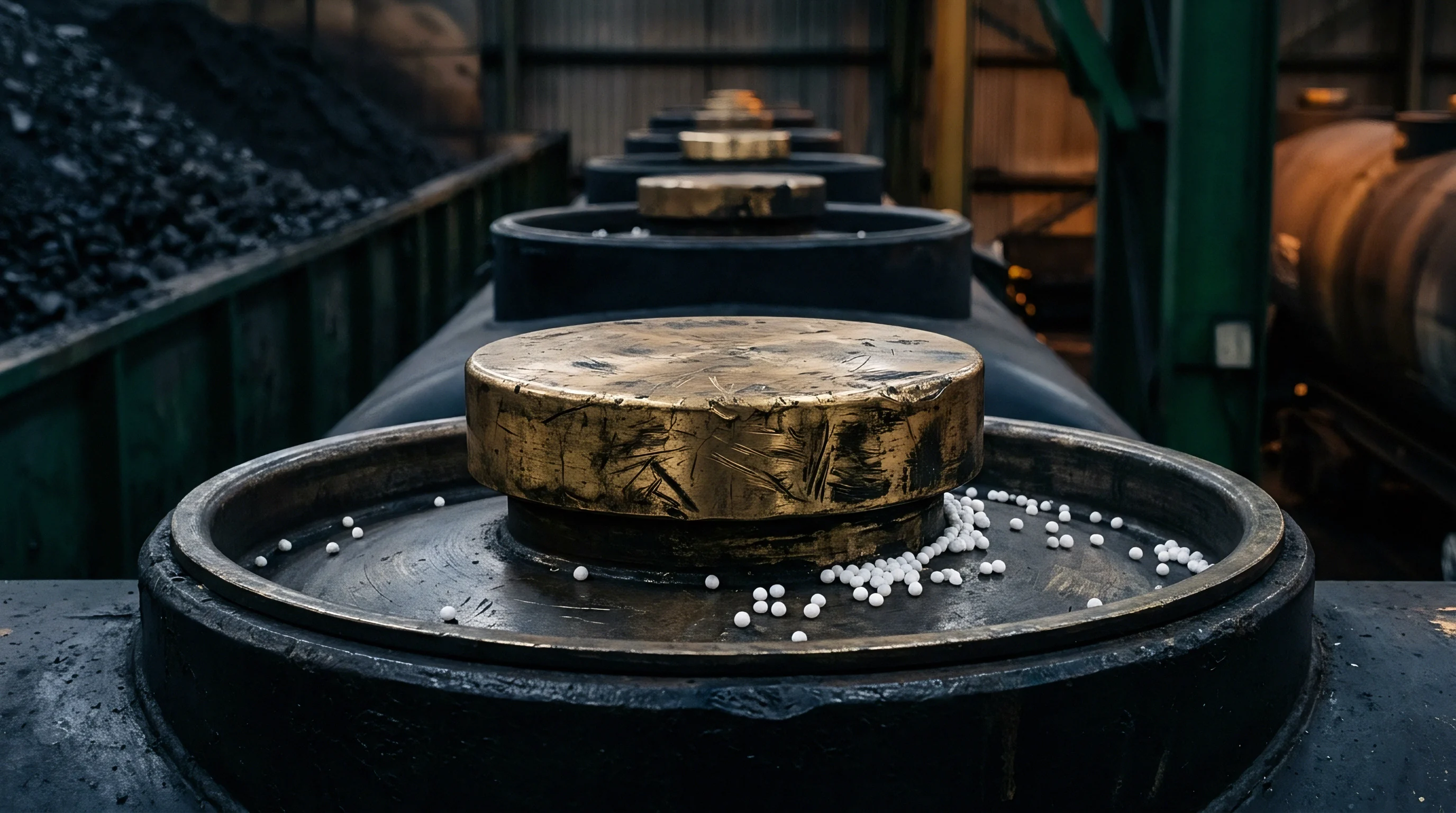
White polymer pellets scatter on the metallic hatches of bulk cargo tank cars parked inside an industrial distribution terminal.

Analysis

The Commission’s action directly targets Taiwanese and Korean resin suppliers found to be dumping material below domestic market prices. Establishing a price floor on this high-volume industrial input increases landed costs for imported ABS, giving European chemical companies room to regain pricing power and raise domestic resin rates. Korean imports face duties ranging from 5.2 percent to 7.5 percent, while Taiwanese material takes on duties between 10.9 percent and 21.7 percent. Because this shifts final landed costs beyond typical contract thresholds, buyers are expected to move volume to European producers or explore alternative Asian polymer sources not covered by the duties.

Automated sorting mechanisms operate over a conveyor belt carrying small white and blue polymer pellets through a controlled industrial factory environment.

Parameters

  • Republic of Korea Duty Rate ~ Duties of 5.2 percent to 7.5 percent applied to ABS imports from Korean producers.
  • Taiwan Duty Rate ~ Duties ranging from 10.9 percent to 21.7 percent on Taiwanese ABS imports, representing the highest duty burden.
  • Affected Material ~ Acrylonitrile butadiene styrene, a thermoplastic polymer widely used in consumer electronics, toys, household appliances, and automotive parts.
  • Market Share ~ The 31 percent share of the European ABS market previously held by Korean and Taiwanese exporters, which will likely shift to domestic producers or alternative regions.

Raw jute sacks of agricultural commodities rest beside black plastic crates inside a spacious industrial warehouse during inventory processing.

Outlook

Over the coming quarters, buyers will monitor European resin producers’ quarterly supply contracts to see how quickly baseline prices rise without low-cost competition. Procurement teams will also need to track capacity utilization among alternative Southeast Asian suppliers, such as those in Malaysia or Thailand, as trade flows adjust to bypass the taxed routes.

Stamped steel automotive panels rest beside textile storage sacks and stacked metal shims on a dark workbench.

Verdict

Procurement departments should immediately recalculate landed cost models for Taiwanese and Korean ABS and prioritize qualifying domestic European suppliers to avoid double-digit price increases.

Signal Acquired from: Eversheds Sutherland

Nomenclature

Trade Remedies

Remedial Action ~ Corrective commercial instruments offset the negative effects of unfair pricing or sudden surges in imports that threaten domestic industries.

Raw Materials Inflation

Upstream Expansion ~ Primary commodity price indexes track the aggregate purchasing cost increases experienced by manufacturers for basic physical inputs including metallic ores, unrefined agricultural goods, crude chemicals and raw timber.

Materials Sourcing

Supply Chain Origin ~ Procurement administration establishes the initial acquisition paths for raw production inputs across international industrial networks.

Automotive Manufacturing

Industrial Production ~ Series production of motor vehicles integrates stamped metal panels, powertrains, interior systems and electronic architectures on synchronized assembly lines.

Chemical Procurement

Supply Acquisition ~ Sourcing industrial raw materials requires identifying verified manufacturers while managing strict technical specifications and safety documentation.

Regional Diversification

Geographic Footprint ~ Strategic supply chain risk management distributes manufacturing facilities, raw material sourcing, contract testing facilities and logistics nodes across multiple geographical zones to prevent single-point network failures.

Engineering Plastics

Polymer Yield ~ High performance polymers occupy a distinct tier of industrial supply chains because structural engineering plastics replace metal components across demanding mechanical applications.

European Trade Policy

Statutory Framework ~ Customs union rules and common commercial regulations define how european trade policy governs the external exchange of goods.

Commodity Risk

Price Exposure ~ Volatility in the cost of raw materials drives financial uncertainty for firms that rely on constant access to physical supplies for their manufacturing or transport needs.

Plastics Supply Chain

Polymer Pathway ~ Petrochemical processing networks transport liquid feedstocks, gaseous monomers and solid synthetic resin pellets from chemical refineries through convertors to end-product packaging manufacturers.

Contract Renegotiation

Structural Adjustment ~ Formal modifications to established commercial agreements allow parties to reset terms when external operational realities deviate from the initial baseline projections.

Anti-Dumping Duties

Regulatory Scope ~ Government intervention measures are applied to foreign goods sold below their fair market value to prevent injury to domestic industries.

What the firm knows, published

Expertise is a utility, not a secret. sentiention™ publishes its working knowledge as open reference: intelligence layer covering the materials it sources, the markets it enters, and the reference that serves both.