Transfer Interface
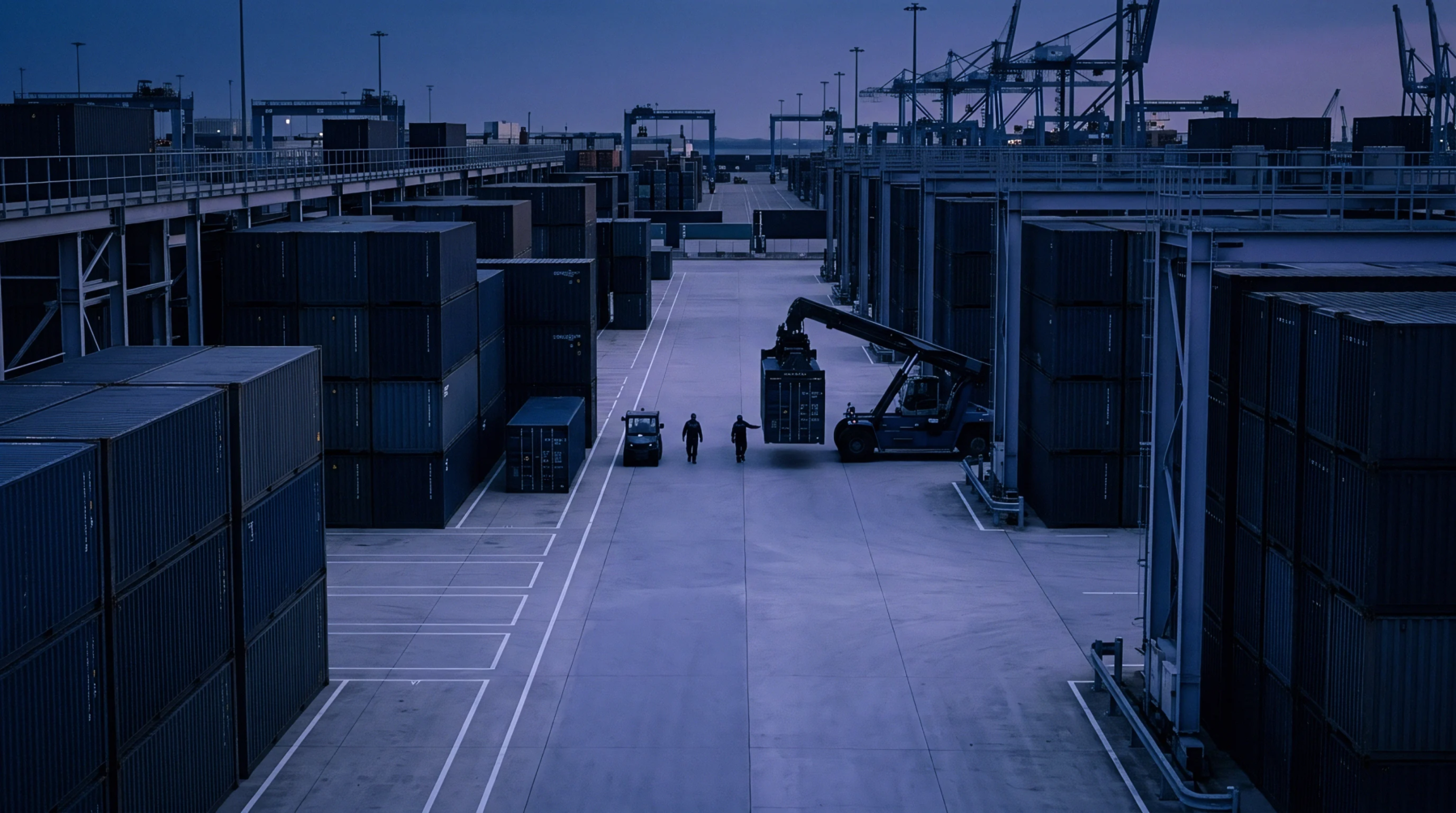
Port infrastructure facilities house specialized berth infrastructure, gantry cranes, storage yards and intermodal rail connections designed to transfer containerized, liquid bulk or dry bulk cargo between ocean vessels and land-based transport networks. Terminal operators coordinate ship berthing schedules, stevedoring labor and customs inspections to maximize quay turnover rates. Operational metrics for marine terminals measure container crane movements per hour, vessel dwell time and gate truck processing times.
The facility definition covers dedicated container, liquid bulk and breakbulk port terminals, excluding inland river barges or inland dry ports lacking ocean vessel access.
Cargo Handling
Ship-to-shore gantry cranes lift containerized freight from vessel holds, depositing boxes onto terminal tractors for transfer to yard stacking blocks. Automated stacking cranes organize import and export containers based on vessel loading sequences and hinterland delivery schedules. Bulk liquid terminals utilize loading arms and vapor recovery units to transfer hazardous chemicals between shore storage tanks and double-hulled parcel tankers.
Infrastructure Congestion
Severe weather events disrupt crane operations, generating vessel backlogs that ripple across international shipping lanes. Sudden surges in container import volumes exceed yard storage capacity, causing truck gate congestion and dwell time fees for importers. Equipment breakdowns on deep-water berths reduce vessel handling capacity, forcing carriers to skip port calls.